Economic crime in 2026: What leaders are seeing and why it matters
Economic crime remains one of the most pervasive and damaging threats facing the UK and the global economy.
Fraud is now the most prevalent crime type in the UK. Organised criminal groups exploit digital channels, global financial systems and regulatory gaps at scale, while law enforcement, regulators and industry face rising demand and finite capacity.
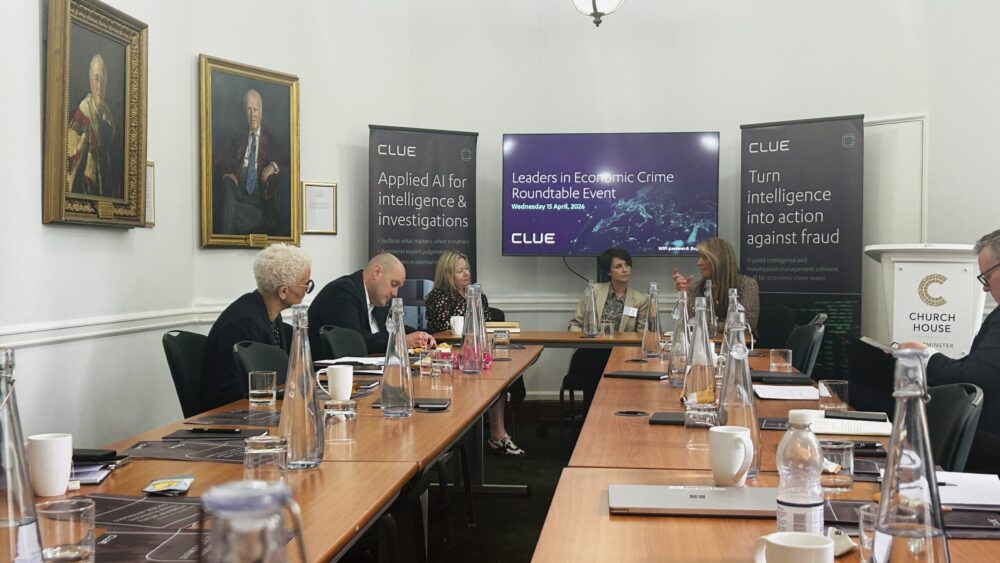
Against this backdrop, our Economic Crime Leadership Event brought together senior leaders from across government, regulation, law enforcement and industry to reflect on how the threat is evolving. While discussions were held under Chatham House Rules, several broad themes emerged that reflect challenges being faced across the board.

A threat shaped by scale, reach and technology
The scale of economic crime is significant:
- Fraud accounts for around 40% of all recorded crime in England and Wales
- An estimated £100 billion is laundered annually through UK‑linked financial systems
- Thousands of organised criminal groups operate internationally, using economic crime to fund wider criminal activity
Economic crime is now global, networked and increasingly enabled by technology. Criminals use digital platforms, social engineering, cyber techniques, crypto‑assets and fast payment systems to reach victims and move illicit funds at speed.
What was once sporadic or opportunistic has become persistent and industrialised. Technology has reduced barriers to entry, enabled scale and obscured traditional distinctions between fraud, cybercrime and financial crime.
There is also growing recognition that economic crime cannot be addressed in isolation. It sits within a broader threat ecosystem, increasingly linked to serious organised crime and, in some cases, national security concerns.
Converging threats, rising harm
A defining feature of today’s landscape is convergence.
Fraud, money laundering, cybercrime and sanctions evasion increasingly overlap and are often driven by the same organised networks. High‑volume offending can mask high‑harm criminality, with proceeds funding drugs trafficking, exploitation, environmental crime and other serious offences.
There is also increasing overlap with geopolitical risk, including the use of complex financial structures and professional enablers to evade sanctions and conceal beneficial ownership. This convergence raises the stakes.
Economic crime is no longer simply a question of financial loss or regulatory compliance. Its impact extends to system resilience, public trust and national security, undermining confidence in institutions, markets and public services.

Shared pressures across the system
While organisations operate in different contexts, several common challenges are widely recognised.
Demand consistently exceeds capacity
The volume and complexity of economic crime make it impossible to pursue all activity. Choices about where to focus effort are unavoidable.
Data volumes are vast and growing
Digital activity has driven an explosion in data from multiple sources and systems. The challenge has shifted from collection to data quality, structure and exploitation.
Cases are increasingly complex
Investigations are more likely to be long‑running, multi‑jurisdictional and evidentially demanding, with significant disclosure and governance requirements.
Together, these pressures reinforce a shared conclusion: the system cannot investigate its way out of economic crime using reactive, case‑by‑case approaches alone.
A move towards prioritisation and prevention
Strong alignment is emerging around the need to rethink how economic crime is addressed.
Rather than responding to individual referrals or alerts in isolation, leaders are increasingly focused on:
- Prioritising activity based on threat, risk and harm, not volume
- Shifting towards intelligence‑led and preventative operating models
- Disrupting criminal networks earlier, upstream of harm
- Using insight to guide operational decisions at scale
This reflects a broader recognition that success cannot be measured solely through investigation and prosecution. Prevention, disruption and harm reduction are becoming equally important measures of effectiveness.
The role of technology – with caution
Technology and AI feature heavily in conversations about the future response to economic crime, but with an important caveat.
Technology delivers value only when it is embedded within coherent operating models. Used well, it can support prioritisation, reduce burden, strengthen governance and enable collaboration. Used poorly, it can add complexity without improving outcomes.
The challenge is not simply adopting new tools, but integrating technology with people, process and leadership so it supports – rather than overwhelms – frontline work.
Looking ahead
Economic crime will continue to evolve alongside technology, geopolitics and global financial systems. While it cannot be eradicated, its impact can be reduced through better prioritisation, stronger collaboration and intelligence‑led approaches that focus on prevention as well as response.
Many of the themes highlighted at the event are explored further in the Economic Crime Threat Assessment, which examines the scale of fraud and illicit finance, the convergence with organised crime and national security, and the implications for organisations operating in high‑demand, data‑rich environments.
The assessment provides a detailed overview of the current threat landscape and outlines practical considerations for strengthening resilience, improving prioritisation and reducing harm.
By continuing to share insight and challenge assumptions at a system level, there is an opportunity to move beyond reactive responses and towards more coordinated, preventative and effective ways of tackling economic crime.
Corporate security risk has entered a new phase. Digital, physical, criminal, regulatory and reputational threats increasingly converge, often through people, identity and suppliers rather than obvious system failures. In this environment, weak signals can escalate quickly, and issues that look isolated on paper rarely stay that way in practice.
Clue Software’s Corporate Security and Integrity Threat Assessment 2026 sets out nine threat areas we see as most significant for large corporates today. Drawing on open‑source and official reporting, regulatory and law enforcement insight, and frontline investigative experience, the assessment focuses on how these threats actually manifest inside everyday business processes.
Below is a high‑level overview of the nine converging threats shaping corporate exposure in 2026.
1. Serious and organised crime
Organised criminal groups increasingly exploit corporate scale, using logistics, supply chains, front companies and routine workflows to hide theft, diversion, counterfeiting and illicit finance in plain sight. Loss often appears as shrinkage, error or damage rather than crime.
2. Fraud
Fraud is moving from “breaking in” to “talking its way in”. AI‑enabled impersonation and synthetic media allow criminals to convincingly pose as executives, suppliers or customers inside normal business interactions, turning everyday approvals and verification steps into attack paths.
3. Terrorism and extremism
The most credible risk remains lone‑actor, low‑sophistication attacks against publicly accessible places. The emphasis for organisations is increasingly on preparedness, clear first‑five‑minutes routines and proportionate protective measures, rather than prediction alone.
4. Cyber crime and information security
Cyber incidents are now dominated by identity abuse, supplier access and quiet footholds on edge devices. Data‑extortion models compress response timelines, raising the stakes for fast, well‑evidenced decision‑making during incidents.
5. Insider threat
Most insider harm is not overtly malicious. Negligent, compromised or coerced insiders are common, particularly across hybrid workforces and contractor networks. State‑linked actors also increasingly seek to manufacture insiders through recruitment and advisory routes.
6. Corporate espionage and hostile state activity
Espionage is typically patient and people‑focused. Access is cultivated through CVs, expert engagements, partnerships and advisory work, exposing sensitive information long before any obvious compromise is visible.
7. Sanctions risk and geopolitical exposure
UK sanctions enforcement has tightened, with rising expectations for event‑driven due diligence and auditable decision‑making. Even routine payments or services can carry serious exposure where value ultimately flows to a designated party.
8. Protest, activism and physical security
Campaigns mobilise quickly online and can translate into on‑site disruption with little warning. Risk increases where early indicators are fragmented, informal or not escalated beyond frontline teams.
9. Safeguarding and exploitation
Modern slavery, labour exploitation and abuse of trust persist deep within supply chains and operations. Stakeholders increasingly expect evidenced action and remedy, not just policy statements.
Why this assessment matters
Across all nine areas, the common thread is convergence. Organisations that perform best bring signals together early, assess risk in context, and escalate to investigation when patterns persist. The Corporate Security and Integrity Threat Assessment 2026 explores these threats in depth, with practical implications and real‑world case studies to support more confident, intelligence‑led decision‑making.
Access the full report to explore each threat in detail and understand what intelligence‑led resilience looks like in practice for large corporates navigating an increasingly complex threat landscape.
Clue has been named one of the fastest growing technology suppliers to the UK public sector, ranking in the 2026 Tech200 Awards.
The annual list, produced by Tussell in partnership with techUK and The Data City, recognises high-growth companies making a meaningful impact across government and public services.
For Clue, this milestone reflects something bigger than our own growth. It highlights the vital work of public sector organisations who protect society from harm every day – from policing and safeguarding to counter fraud, regulation, and national security. These teams operate in high-consequence environments where accuracy, accountability and public trust matter, and we’re honoured that Clue plays a role in supporting their mission.

Our platform is purpose-built to bring intelligence, evidence and investigative information together in one secure system, helping teams detect threats earlier, uncover insights faster and demonstrate real impact. Being included in the Tech200 is a testament to the dedication of those who put this technology to work – the investigators, analysts, and operational leaders who rely on Clue to help keep people safe.
Reflecting on the achievement, our CEO Clare Elford said:
“We’re pleased to be recognised in the 2026 Tech200 list for the fastest growing technology suppliers to the UK public sector. Our growth in the public sector reflects the vital work of the teams who protect society from harm every day. These organisations operate in high-consequence environments, and we’re proud to support them with mission-ready technology that brings intelligence and investigative information together, enabling them to make a bigger impact.
“This recognition is ultimately a tribute to their commitment, and we remain focused on building software that strengthens their ability to keep people safe.”
As we continue to expand our product, our team and our community, our focus remains clear: to build world-class technology that helps organisations detect, disrupt and resolve harm – and ultimately protect society.
Clue has released its Economic Crime Threat Assessment: Risks and Resilience in 2025, offering a clear view of how fraud, money laundering, sanctions evasion, and cybercrime are converging to undermine financial integrity and national security.
“Economic crime is no longer a niche financial issue – it’s a global, systemic threat,” says author of the assessment, Laura Eshelby, Head of Economic Crime at Clue. “We must disrupt early, invest in technology and skills, and work across sectors to fight back.”
A fast-evolving threat
Fraud now accounts for 40% of all crime in England and Wales, costing the UK an estimated £200 billion annually, with £100 billion laundered through UK-linked structures. Two-thirds of fraud is cyber-enabled, while 86% goes unreported, leaving major blind spots for enforcement.
The assessment highlights key risks across public services, industry, finance, and individuals – including large-scale public sector fraud, AI-driven scams, insider threats in remote workforces, and organised criminal networks operating across borders.
Building resilience
The report sets out priority actions for government, law enforcement, and industry to strengthen defences, including:
- Closer public–private collaboration and intelligence sharing
- Investment in cyber skills, digital forensics, and AI literacy
- Shifting from reactive response to early disruption
- Leveraging new legal tools like the Economic Crime and Corporate Transparency Act
Download the full Economic Crime Threat Assessment
Economic crime is a universal threat – this assessment is essential reading for organisations across all sectors seeking to protect their people, assets, and operations from increasingly sophisticated risks.
In the latest episode of Joining the Dots, Thomas Drohan speaks with Anna Rowe, founder of Catch the Catfish and a leading voice in online safety, about her experience of being targeted by a romance fraudster – and how it led to a campaign for change.
A relationship built on lies
Anna met “Anthony” on a dating app. He said all the right things, seemed genuine, and over time, gained her trust. But it turned out he wasn’t who he said he was—not just in name, but in everything. For over a year, he manipulated her emotionally, maintained a double life, and was simultaneously deceiving other women.
How these crimes work – and why they’re so hard to see
Anna shares how grooming, love bombing, and psychological manipulation play a central role in romance fraud. She also explains why victims often don’t spot the red flags until it’s too late – and how shame and stigma can stop them from speaking out.
The role of technology in enabling abuse
From AI-generated video calls to fake online identities, scammers are increasingly using tech to build convincing personas. Meanwhile, many platforms still fail to remove fake profiles—even when there’s clear evidence. Anna and Thomas discuss what needs to change to better protect users.
Shifting from blame to prevention
This episode highlights the need to move away from victim-blaming and toward smarter prevention—through better tech safeguards, stronger policy, and greater public understanding. Anna’s work is helping victims regain control, while pushing for systems that stop this kind of abuse at the source.
A must-listen for anyone concerned about online dating, tech accountability, or protecting vulnerable people in the digital age, listen to our latest episode, Anna Rowe: How being catfished sparked an online safety movement.
In our latest Clued Up community session, we brought together customers from across sectors to explore the latest developments in Clue – and share insights on how to get the most from their applications.
This session focused on Gadget 2.1, our latest product release, and gave users a first look at new features and improvements that help streamline workflows, unlock insights, and support even more efficient investigations.
From slicker ways to manage data to new analytics capabilities, Gadget 2.1 reflects our commitment to continuous innovation – shaped by feedback from the people using Clue every day. Attendees had the opportunity to see the updates in action and hear directly from our product team, who shared not just what’s new, but why it matters.
More than a product showcase, Clued Up sessions are about community. These regular events are designed to bring our users together, share best practices, and create space for open discussion – whether you’re looking to deepen your knowledge of the platform or simply connect with others tackling similar challenges.
Interested to hear more about how our software is evolving or want to join a growing community of investigation professionals? Get in touch, we’ll talk you through how Clue can work for your team.
In this spotlight interview, we sit down with Nicola Thorn, Senior Intelligence and Investigation Consultant at Clue. With a distinguished career spanning the British Army, Metropolitan Police, and the National Crime Agency, Nicola brings unparalleled expertise to the forefront of intelligence and investigative work.
Nicola’s journey began in the military, where her first deployment to Northern Ireland set the tone for a career shaped by resilience and high-stakes operations. Transitioning into policing in 2004, she worked on a wide range of frontline crime investigations and played a pivotal role in major cases – including the recovery of £9.6 million from the Securitas robbery, one of the largest cash finds in UK police history.
Her passion for proactive operations led her to covert roles and undercover work targeting drug networks and exploitation rings. Later, as part of the NCA’s National Cyber Crime Unit, she helped defend critical national infrastructure against cyberattacks during the COVID-19 pandemic.
At Clue, Nicola uses her frontline experience to help clients leverage the platform’s powerful capabilities. From government departments to law enforcement and sports organisations, she supports teams in tackling serious and organized crime, safeguarding issues, and emerging threats with clarity and precision.
Oh – and did we mention she’s also appeared on Channel 4’s Hunted as part of the ground hunter team?
Watch the full interview to hear Nicola’s remarkable story and learn how her operational insights are shaping Clue’s impact around the world, and connect with her if you’d like to learn more about how Clue can support your work.
The new offence of failure to prevent fraud places a clear duty on large organisations to take proactive steps – or risk criminal liability. In this article, I explore what the new offence involves, how organisations can meet their obligations, and the steps you can take now to strengthen your fraud prevention approach.
What is the ECCTA offence?
The Economic Crime and Corporate Transparency Act 2023 introduces a new corporate criminal offence: failure to prevent fraud. From September, large organisations can be held criminally liable if someone associated with them commits a qualifying fraud offence intended to benefit the organisation – even indirectly.
Who does it apply to?
The offence applies to ‘relevant bodies’, meaning companies or partnerships that meet at least two of the following criteria:
- More than 250 employees
- Turnover greater than £36 million
- Total assets over £18 million
These thresholds apply across the whole organisation, including subsidiaries.
Who is considered an ‘associated person’?
An ‘associated person’ includes anyone providing services for or on behalf of the organisation. This can include:
- Employees
- Agents
- Subsidiaries
- Franchisees
- Supply chain companies acting on the organisation’s behalf
What counts as a fraud offence?
The list includes, but is not limited to:
- False representation
- Failing to disclose information
- Abuse of position
- False accounting
- Cheating the public revenue
- Fraudulent trading
- Making misleading statements to an auditor
The offence only applies to fraud where the organisation benefits – not to fraud committed against the organisation.
Strict liability offence
The failure to prevent fraud offence is a strict liability offence. This means that if:
- A qualifying fraud offence occurs
- It is committed by an associated person
- The organisation meets the size threshold
– then the organisation is automatically guilty, unless it can prove it had reasonable procedures in place to prevent fraud, or that it was unreasonable to expect such procedures in the circumstances. What counts as ‘reasonable’ will depend on factors like size, complexity, and sector. The Home Office guidance outlines six principles to help organisations meet this test.
What should organisations do to prepare?
The Home Office guidance sets out six principles for effective fraud prevention. These are broadly aligned with existing best practice in risk and compliance.
1. Top-level commitment
A strong anti-fraud culture should be led from the top. Board-level sponsors should ensure there are clear, well-communicated policies and procedures – including whistleblowing mechanisms.
2. Risk assessment
Carry out regular fraud risk assessments focused on employees, agents, and third parties. Assessments should be documented, reviewed, and updated in response to emerging risks.
3. Proportionate procedures
Prevention measures should match the level of risk. This includes defined fraud policies, supply chain oversight, and internal controls tailored to the nature of the organisation’s operations.
4. Due diligence
Implement robust due diligence processes for all associated persons. Use technology and data analytics to monitor high-risk areas, such as procurement and supplier onboarding.
5. Communication and training
Train employees and associated persons on fraud risks, whistleblowing, and consequences of misconduct. Keep the organisation’s fraud stance visible and consistent.
6. Monitor and review
Set up systems to regularly review and improve fraud prevention measures. Work across departments to evaluate risk controls, update policies, and adjust responses as needed.
“Effective fraud prevention isn’t just good practice; it’s now a legal necessity for many,” says Neil Green, Deputy Director of the Counter Fraud and Investigation and Audit Response Team, Government Internal Audit Agency.
It begins with a clear-eyed assessment of your organisation’s fraud risks. Regularly reviewing where you may be exposed is essential to building strong, practical defences that actually work.”
The importance of documenting your approach
Detailed records should be kept of all fraud risk assessments, control decisions, training sessions, and due diligence activities. This documentation will be critical in demonstrating compliance if the organisation is ever challenged on its approach.
How can technology help?
Technology plays a vital role in identifying and preventing fraud. Organisations can use tools to:
- Analyse risks and detect anomalies across payment streams and governance
- Monitor control effectiveness in real-time
- Prioritise alerts and incidents based on risk
- Automate audits and investigations
- Create an audit trail for assurance and regulatory review
AI and data analytics are increasingly being used to power smarter, faster fraud detection – especially when guided by business and sector-specific risk insight.
What about the Crime and Policing Bill 2024?
The Crime and Policing Bill (CPB) is set to go even further than ECCTA. It proposes a broader corporate attribution regime, making organisations liable for any criminal offence committed by a senior manager – not just economic crime.
This means the same liability could apply to offences across all areas of a business, not just fraud.
The CPB uses the same definition of a ‘senior manager’ as ECCTA: someone who plays a significant role in the management or organisation of the business. This could include:
- Board members and senior executives
- Heads of department (e.g. compliance, legal, HR)
- Regional or divisional leaders
Organisations should now review their risk assessments, controls, and training to ensure they’re also prepared for this broader legal exposure.
Conclusion
The ECCTA is a major change – but it builds on existing best practice in fraud risk management. Many organisations will already be on the right track.
The key is proactive preparation: having clear, documented procedures in place to prevent fraud, and being able to demonstrate this if required.
By following the Home Office principles, investing in training and due diligence, and embedding fraud prevention into day-to-day operations, organisations can build a strong, defensible position.
Clue can help
Laura Eshelby leads Economic Crime at Clue Software. Learn more about how our software helps investigations and intelligence teams tackle fraud, corruption, money laundering and sanctions evasion across a wide range of sectors or contact Laura to discuss how we can help your team.
Join us at the North West Fraud Forum
Laura Eshelby and Neil Green, Deputy Director for Counter Fraud at the Government Internal Audit Agency, will be speaking at the North West Fraud Forum (NWFF) event on September 11.
In this session, they will:
- Share strategic frameworks and tools for identifying and responding to fraud threats
- Show how public bodies are preparing for ECCTA
- Offer practical insights on what ‘good’ looks like across sectors
Whether you lead strategy, manage risk, or oversee compliance, this masterclass offers practical, actionable guidance for navigating a fast-changing fraud landscape.
I recently had the opportunity to present at the 14th Annual Counter Fraud, Cybercrime and Forensic Accounting Conference at the University of Portsmouth. The topic I explored was how fraud has evolved into a global business opportunity for organised criminals – and the considerable challenges this presents for disruption and prevention efforts. Below is an overview of the key points we covered during that session.
The scale of the challenge
Fraud now accounts for 43% of all crime in the UK, with 1 in 14 adults falling victim (ONS). Of the frauds reported, 70% have an international element (City of London Police), with total annual losses estimated at £219bn across all sectors (Crowe), including £55bn in the public sector alone (NAO).
On a global scale, the Global Anti-Scam Alliance (GASA) estimates losses could exceed $1 trillion, with half the world encountering fraud weekly. These figures may still be underestimates – 70% of global victims and 86% of UK victims are believed not to report fraud, often due to shame, embarrassment, or a belief that little will be done in response.
Regional trends in fraud
According to Interpol, fraud patterns vary by region. In Europe, business email compromise and investment fraud dominate, while in Africa, romance scams and advance-fee frauds are more prevalent.
Interpol has referred to the situation as an ‘epidemic’, pointing to rapid technological change and the industrial scale of organised crime operations. Criminals increasingly leverage AI to enhance scams and use cryptocurrencies to move illicit proceeds globally, complicating law enforcement efforts.
The rise of fraud factories
One of the most striking illustrations of organised criminality is the emergence of fraud factories – highly structured criminal operations functioning like corporations. These are often staffed by trafficked individuals who believed they were applying for legitimate jobs in marketing or IT but were instead taken to compounds across Southeast Asia.
Since the COVID-19 pandemic disrupted traditional laundering routes (e.g., casinos), criminals have shifted focus. It’s estimated that over 220,000 people are being held in fraud compounds in Asia, with global losses exceeding $75bn between 2022 and 2024.
These factories train individuals to run romance and investment scams targeting victims across the USA, UK, Europe, and China. Interpol and the UNODC report strong links between these activities and other organised crime such as human trafficking and narcotics.
Organised threat in the UK also
The UK is not immune to this sophisticated threat landscape. For example, Operation Destabilise, led by the NECC, NCA and international partners, disrupted a global money laundering network that used crypto assets to facilitate luxury lifestyles for sanctioned individuals.
The results were significant:
- 84 arrests
- £700m in assets seized
- £200m in crypto assets recovered
This and other operations demonstrate the corporate structure of organised crime, with UK links to multi-national syndicates conducting phishing, trafficking, and large-scale fraud.
Fighting back with technology and collaboration
To counter these threats, we must match criminals in their use of technology and innovation. This includes:
- AI-powered analytics to detect anomalies in financial systems
- Cross-jurisdictional intelligence sharing
- Data-driven resource prioritisation
Successful disruption efforts – such as those by Interpol, the NCA and others – underscore the importance of partnerships between law enforcement, industry, and government.
Equally critical is the protection of trafficked workers in fraud compounds, some of whom are victims themselves. Support services and, where possible, rehabilitation efforts must be prioritised, despite the complexities posed by varying legal systems and approaches to justice.
Clue’s role in tackling economic crime
At Clue, we provide a powerful investigative platform trusted by law enforcement, government, and private sector teams. Our software is built to help intelligence and investigation professionals connect data points, manage cases efficiently, and drive smarter decision-making.
We empower users to:
- Uncover hidden relationships in vast datasets
- Collaborate securely across agencies
- Streamline complex fraud and financial crime investigations
We’re proud to support organisations in their mission to disrupt economic crime – and are committed to evolving our tools to stay ahead of organised criminal threats.
Want to learn how Clue can support your organisation? Book a meeting with me here.
Also, catch up with our Joining the Dots podcast, with guests including Professor Mark Button and the NECC’s Nick Sharpe discussing some of these themes in more depth. Listen to Joining the Dots
Fraud remains the most widespread crime in the UK, and it’s growing in both complexity and scale. Law enforcement and intelligence agencies need continued support from government, industry, and technology providers to remain agile and effective.
Meanwhile, tech and social media platforms must take greater responsibility to remove fraudulent content – whether false job ads, bogus investment schemes, or crypto scams.
Ransomware attacks are no longer the exclusive domain of faceless hackers exploiting remote digital vulnerabilities. Increasingly, they hinge on a more accessible and exploitable asset: insiders. Whether negligent, compromised or complicit, employees, contractors and third-party partners are now central to the ransomware threat landscape.
Rethinking the narrative
The traditional story of ransomware centres on brute-force attacks, phishing or vulnerability exploitation from the outside. But recent high-profile incidents reveal a more complex picture – one where the “attack surface” includes people inside the organisation. Social engineering, third-party compromise and credential misuse are the new frontlines of ransomware campaigns.
The insider factor in ransomware: sector highlights
Retail sector
Marks & Spencer (April 2025)
The Scattered Spider group impersonated M&S IT staff to bypass service desk protocols. By disabling multi-factor authentication, they deployed ransomware that disrupted online shopping, payments and loyalty systems – wiping £300 million from operating profits and £1 billion from market value.
Co-op Group (April 2025)
A ransomware attack exploited third-party vendor vulnerabilities to access and compromise Co-op’s back-office and customer service systems, exfiltrating sensitive data and crippling daily operations.
Harrods (April 2025)
Although ransomware was not deployed, a thwarted attack prompted a lockdown of internet access across Harrods’ sites. The attempt exposed weaknesses in third-party access control and the importance of insider vigilance.
Victoria’s Secret (UK) (May 2025)
A ransomware attack took systems offline for days and delayed financial disclosures. Internal credential mismanagement provided the entry point.
Law enforcement sector
Greater Manchester Police (September 2023)
Over 12,500 staff had personal data compromised when ransomware targeted their ID card supplier. Exposed information included names, photos and badge numbers – valuable assets for coercion or impersonation.
Metropolitan Police (August 2023)
A third-party supplier breach led to unauthorised access to sensitive personnel records, raising concerns over both officer safety and insider exposure.
Eurofins Forensics (June 2019)
The ransomware attack that halted forensic services across the UK forced law enforcement to delay thousands of investigations. Reports indicate the ransom was paid to restore operations.
Healthcare sector
NHS 111 / Advanced (August 2022)
Attackers used a compromised third-party credential to deploy LockBit 3.0 ransomware, disrupting ambulance dispatch, referrals and mental health services. The impact lasted weeks, and data exfiltration was confirmed.
Local government
Hackney Council (October 2020)
Pysa ransomware actors exploited a dormant internal account and an unpatched vulnerability, crippling council services from housing to benefits. The recovery cost exceeded £12 million.
Redcar & Cleveland Council (2020)
A phishing email led to a total systems lockdown and weeks of manual operations. The financial impact surpassed £10 million – all triggered by a simple staff mistake.
What ransomware groups look for in insiders
Ransomware operators increasingly exploit:
- Financially vulnerable individuals – those under economic stress are more susceptible to coercion or bribery
- Privileged access holders – admin-level users offer the fastest route to mission-critical systems
- Disgruntled employees – workplace dissatisfaction can drive malicious intent or indifference to risk
- Third-party vendors – external partners with internal access, often less monitored, are easy prey
Why traditional cybersecurity falls short
Security protocols typically assume threats come from outside. This leaves insider actions – whether malicious or accidental – dangerously under-monitored.
Key shortcomings include:
- Trusted status – insiders bypass many traditional cyber defences simply by operating within the perimeter
- Limited behavioural monitoring – subtle anomalies like off-hour access or unusual data transfers may not raise alerts
- Under-scrutinised third-party access – external partners often enjoy extensive access with limited oversight
An intelligence-led insider risk strategy
To counter this evolving threat, organisations must adopt a more holistic, intelligence-driven approach:
- Behavioural analytics – leverage tools that detect deviations in user behaviour and access patterns
- Cross-functional collaboration – align IT, HR, compliance and security teams to create a unified risk profile of users
- Third-party risk management – rigorously vet and continuously monitor vendors, especially those with privileged access
Reframing the ransomware risk
Recent incidents involving M&S and Harrods make one thing clear: ransomware is no longer just a cybersecurity problem – it’s a human and operational risk. Defenders must understand that ransomware may not start with a firewall breach. It could begin with a message to an employee’s personal device, or a compromised contractor logging in with trusted credentials.
Want to stay ahead of insider threats?
Access our latest Insider Threat Assessment to understand why insider risk is increasing and why traditional cybersecurity tools like SIEMs aren’t enough. This report uncovers a new intelligence-led approach for early detection and prevention.
Inside you’ll find:
- The evolving tactics and motivations behind insider incidents
- Real-world case studies from government, law enforcement, defence and private sectors
- Why insider threats often evade traditional cyber defences
- A practical framework for behavioural monitoring and cross-functional response
- How Clue enables organisations to uncover hidden risks through integrated intelligence
Get the full report and strengthen your insider risk strategy today.