Is automation key to effective counter fraud?
The following is an extract from the Clue report Counter Fraud: Navigating the Path to Prevention, based on a survey of counter fraud professionals in government, public sector and law enforcement.
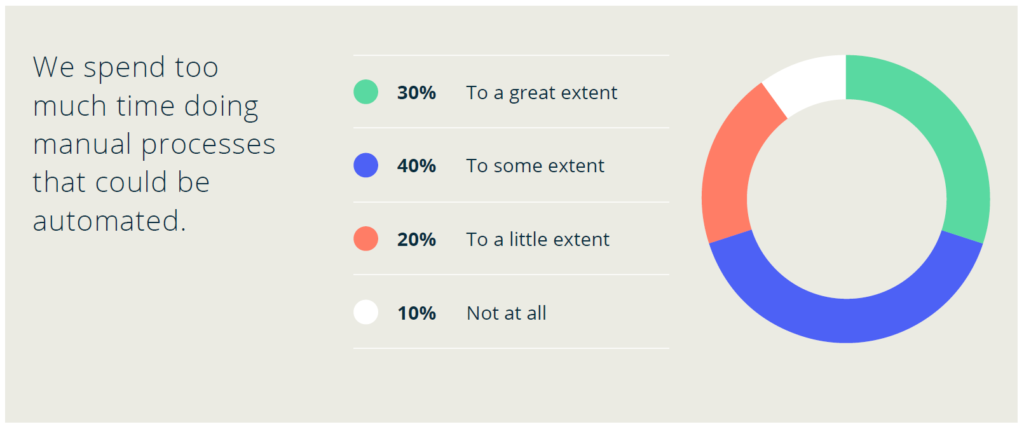
Admin and data entry tasks don’t tend to be what attracts investigators into the profession. But with three-quarters (75%) of counter fraud investigations teams reporting that time is easily consumed by manual processes, specialists are too often held back from doing what they signed up for.
That’s according to our counter fraud survey, which found that with more time being allocated to extracting data insights, stretched teams are exploring how automation technologies can relinquish resources, especially when combined with moving workflows into a single system.
A balanced approach to automation
However, the degree to which automation technologies are implemented must be balanced with the ability to configure tools and processes and retain human oversight of delicate investigations.
Respondents spoke positively of progress with controlled and measured approaches to automation. Projects include connecting interoperable systems to ease processing of unstructured data. Entities from documents, or notes, for example, can be automatically indexed and cross-checked against a ‘watchlist’ already known to the investigator.
Perceived rates of adoption are varied. One organisation reported their use of automation was already “slick”, for example. Another claimed they were exploring machine learning and AI techniques. Others admitted automation tools within current systems could be better utilised.
Using technology to manage the data we have could enable us to turn it from a threat to an opportunity. If criminals are making effective use of technology, we should be.
Survey respondent
Not only is unlocking investigators’ time crucial to shift the balance towards preventative counter fraud activity, but automation technology also offers advantages to active cases. Disclosure was regarded as a process ripe for automating resource-intensive data entry and redaction procedures.
Automating aspects of investigations and detection requires caution, however. Automation should be employed not to lead an investigator’s work, but to assist and support it.
In a field laden with sensitive information and profound consequences, it must be clear exactly how, why, and what decisions are being made by technology and where human decision-making must intervene. Transparency, auditability, and repeatability of all automated activity is key.
While a discussion around ethics is essential, however, organisations should not lose sight of the quick wins that are available.
Clue helps law enforcement agencies, corporations, public sector organisations and others detect and prevent economic crime.
Learn more about Clue for economic crime and enquire about a demo today.
Related Resources

Beyond the Five Eyes: what global fraud landscapes can teach us
New research presented at ISEC 2026 reveals how fraud evolves alongside economic and technological development, offering valuable lessons for practitioners t...
Learn more
Introducing our SOAC Threat Assessment 2026
In our Serious and Organised Acquisitive Crime (SOAC) Threat Assessment 2026, we explore how low‑level loss and repeat incidents often form part of wider org...
Learn more
Economic crime is evolving - our collective response must too
Insights from Clue’s latest Threat Insight Group on emerging threats, system-wide challenges, and responses to economic crime.
Learn more