Thomas Drohan
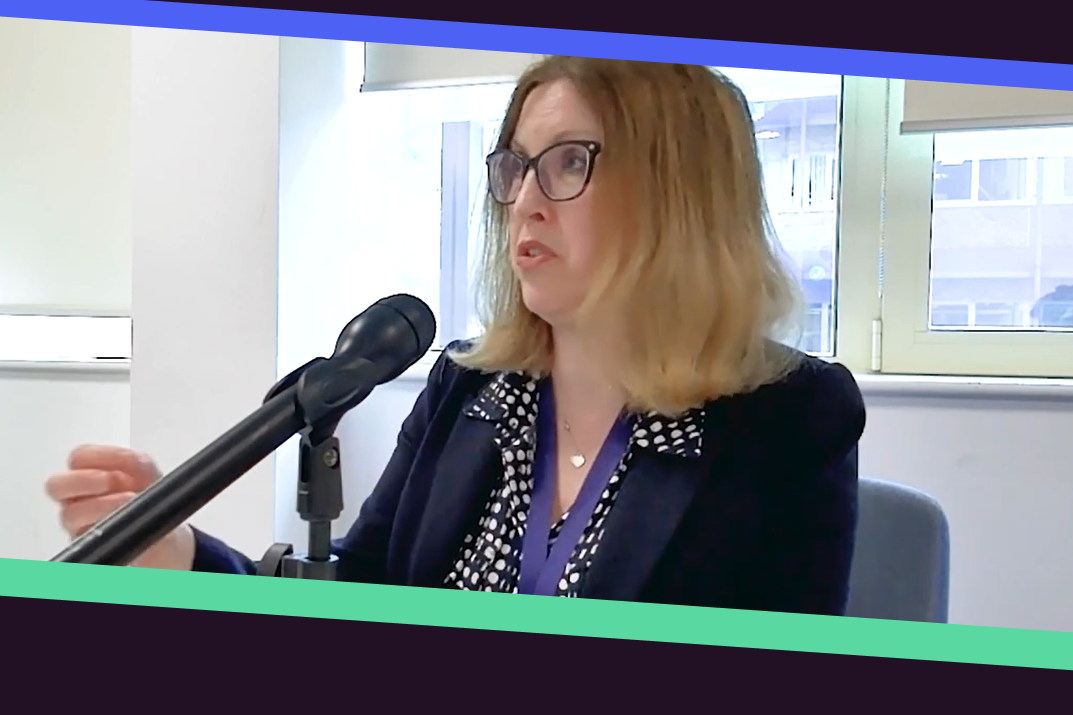
Today we are going to be talking about the work of the National Economic Crime Centre and more broadly the UK law enforcement response to economic crime. What’s quite interesting here is we’re going to be looking through the lens of Operation Machinise. This is an operation that targeted seemingly legitimate high street businesses, but that on closer inspection were harbouring money laundering, organised crime, modern slavery type operations. So that should be really interesting. Even more interestingly, we are here discussing this with Rachael Herbert, who is the director at the National Economic Crime Centre. So first of all, welcome Rachael.
Rachael Herbert
Thank you very much. And it’s probably easier to say neck. throughout this podcast rather than National Economic Crime Centre. But yes, I’m delighted to be here.
Thomas Drohan
Thank you very much. So Rachael, would you like to kick off a bit of your background and your story?
Rachael Herbert
Let’s bizarrely start with where I am as the history. So the National Crime Agency is a perfect blend of civil servants, law enforcement officers, intelligence officers and private sector. So I’m personally a career civil servant, I guess you could call me. I started in job centres actually in my 20s, straight out of university and stayed for about 10 years. And then I actually stepped away from the world of work for well over a decade. I was a stay at home mum, bringing up my children and then decided to restart my career when they were getting a bit older and gravitated towards the civil service again. I was lucky enough to get a great job in Cabinet Office working on constitutional matters and then about just over 10 years ago saw a really interesting job advertised in the very new National Crime Agency. which was really about stakeholder engagement and working with the private sector, which has always interested me and was lucky enough to get it and I have been here ever since. I have dedicated the last 10 years to working in economic crime. although the National Crime Agency is obviously responsible for many serious and organised crime categories. I’ve always worked in economic crime. I find it absolutely fascinating and illicit finance is that thread that goes throughout criminality. But that has been a wonderful 10 years. In that 10 years, we then developed the NEC. So the NEC’s been around for approximately 6, seven years now. It is legally the National Crime Agency but it’s very culturally multi-agency. So the NEC has people from policing, HMRC, both the key regulators that I work with are in the NEC. So we have Financial Conduct Authority and Ofcom and probably some partners I’ve not mentioned, insolvency service, pension regulator and of course the private sector. So that’s what’s really great about the NEC that it is very multi-agency so we can bring together the system to tackle economic crime threats.
Thomas Drohan
Okay, well thank you very much for that. I think two things that jump out to me is first of all, moving from the Cabinet Office into the NCA. Was there a sort of a cultural thing? You know, I sort of associate the NCA with sort of, you know, raids and sort of organised crime and the Cabinet Office is perhaps more policy orientated. Did you find a culture shock or was it actually quite smooth as you moved in?
Rachael Herbert
I mean, the National Crime Agency is definitely about tackling the threat, but of course we tackle the threat across what we call the four P’s. So a lot of what is known about the National Crime Agency is that raids and going through a door and arresting people and obviously that’s a critical part of our work. We work at the very complex end of investigations. So that’s what we call our pursue work. but actually of equal importance to the National Crime Agency and of equal importance to the threat is what we can do to prevent the threat, what we can do to protect people from the threat and what we can do to prepare for the threat. So that’s the area that I work in, that looking for long term sustainable solutions. Now some of those solutions will be legislative and some of those solutions will be policy and that’s my background. So a smooth transition into, what the core of the civil service is, making sure that policy and legislation is right for UK citizens, but also really interesting to see the almost the direct operational impact of work that I’m responsible for, working across with colleagues, especially in the Home Office, to make sure policy and legislation is threat led. So Yes, some parts of it were very new to me, but some parts of it were really familiar.
Thomas Drohan
Yeah, And the other thing that jumps out to me is women in CD leadership, particularly in law enforcement, you know, certainly from our podcasting, you know, and just observation that there’s not enough representation. I just wonder what your experience has been and your reflections on that.
Rachael Herbert
Yeah, so a massively important topic to me, one I’m really passionate about. So I think It’s so much better than it was a decade ago. I interact with senior leaders in the FCA, in the SFO, in HMRC, in policing every single day and a really great representation of a diverse mix of people, including increasingly women in senior roles. Of course, this agency was led by a woman for many years, Lyn Owens. You know, the most senior, you know, law enforcement job you can get. that was really inspirational. But I’m also really interested in how we make our working environment better for women. And so I’m passionate about obviously looking at my CV, people that women that haven’t had the traditional CV career, you know, may have taken time out for caring responsibilities or may need to take time out for caring responsibilities as things like parents get older, really passionate about making that smooth as possible and have always advocated for alternative working patterns. I’ve been lucky enough both in the wider civil service and the National Crime Agency to be able to work under alternative working patterns that let me pick my children up from school, you know, do those huge logistical exercises. I mean, I’ve got three children, you know, lots of times, especially when they were younger, I needed that flexibility for work. So I make sure as I become a more senior leader that I don’t, that I remember how much I benefited from that and made sure everyone gets access to it.
Thomas Drohan
That’s great that your experience is so positive and you’re obviously a role model for those coming through. So that’s great to hear. Okay, so should we start to talk about Operation Macanese and sort of where that’s going? Should we start with you, perhaps a bit of a background to what it is and for the audience?
Rachael Herbert
Yeah, so one of the priorities in the NEC is money laundering, just to be clear at the beginning, the NEC is responsible for the operational response to all economic crimes. So that’s fraud, but also illicit finance. And illicit finance, a big element of illicit finance is tackling money laundering. So we had, I would say, the intelligence picture, which actually started with barber shops, But the intelligence picture had changed over a period of time to say that local policing and local policing intelligence was key to mechanize. They were seeing more what we call a high street cash intensive businesses that was a hub for polycriminality. So this isn’t just about the money laundering. I mean, we have seen organized criminals making huge use of these illicit cash intensive businesses on the high street to launder money, but also just some of these shops are just a hub for local criminality. And so we worked across policing and HMRC just to say, is this something we can look at as a system, rather than policing looking at in their local area or HMRC looking at it through their lens of, not paying tax or smuggling cigarettes, could we look at this as a system and maybe target some of the most egregious areas that were coming up here in our intelligence to deter? So to arrest people or to send out a message that we were looking at the high street, but also to learn more about the threat. I mean, one of the great things about… being responsible for what I’m responsible for is I get so much of my intelligence from live operations in the National Crime Agency as well. So we did that and genuinely we knew there would be an impact but we didn’t anticipate just how much great intelligence is being held by police and how much interest there was. So we piloted this in March 2025 and we had quite an interest. We had approximately 20 organisations say yes they’d like to work together on Mackinac We coordinated the visits to various businesses and we had a real inflow of intelligence. And I think in that first exercise, I think we were mainly focused on barbershops, because that’s where the intelligence was coming in, and we visited about 380 premises, eighty-four warrants executed, thirty-five arrests, and over 1,000,000 pounds worth of illicit finances.
Thomas Drohan
So, And were you working with just those 20 sort of organisations? These are sort of other bodies that play a role in, you know, in the sort of in this area. So that might be trading standards, that might be HMRC, that might be, can you give a quick picture of that?
Rachael Herbert
Yeah, so I mean the key partner is local policing, but also HMRC, also trading standards. So yes, we coordinated it. And what’s really important about this approach to an economic crime issue, in fact, this approach to any crime is we have complementary powers. So, there are powers that policing have, and there are powers that national trading standards have, and there are powers that HMRC have, and they complement each other to come together to think what’s the best way to tackle this threat. So, that was the what we what we refer to as machinised one.
Thomas Drohan
And just be digging into that quickly, I suppose the other part of that multi-agency approach is that everyone has a different piece of the puzzle. So maybe, local policing in isolation might not have the smoking gun that gives you that real clear indication. But when you combine it with, national training standards data or HMRC data or whatever, you get just this bigger sort of picture that collaboration gives you that.
Rachael Herbert
And this thread runs throughout everything the NEC does. I mean, the reason that NEC is multi-agency is because not just that complementary powers that I’ve talked about, but all the agencies and bodies represented within the NEC have the ability to reach back into their intelligence picture in their own agencies or police forces and bodies and bring that to the table. So yes, that is really important. It’s what some like to refer to as the holistic approach to a problem, but it is really getting everyone in the same space, collaborating with their intelligence picture, collaborating with their powers, and then collaborating with what went well, what did we really find worked well in Mackinac and actually what really worked well. I mean, obviously we got great arrests and there was a a real sort of interest from media. Now, I always knew that media would be interested, but there was, I would say, for me, it was more interest than I anticipated. And I look, the high street really matters to people. And I think, you know, we’ve all read in the press people’s complaints about 8 barber shops. And it’s not just barber shops. I must say, by the way, there are plenty of really good, legitimate and this is impacting their business as well. But people complain about their high street becoming full of these businesses that are all the same and attracting, unhelpful behaviour. But I was still struck by just how much interest we got from the media and how much interest we got from the public. And it’s really important, I think, for an area like mine Although I’m passionate about money laundering and economic crime, I’m wise enough to know that it’s quite a dry subject matter for most people. Most people, I think, would still think about money laundering as something that goes on in the city and doesn’t impact their day-to-day lives. And I’m saying no, money laundering is impacting your high street. It’s the businesses that you don’t want in the high street. Money laundering is part of that. Money laundering fuels violence on the street. So that was a really interesting angle. And I think the success of that led us to plan a much bigger mechanized approach in October. The difference on that approach, I mean, it was much bigger.
Thomas Drohan
October 25, we’re here in early 2026, just to give listeners a bit of a context on timelines.
Rachael Herbert
So what we did on our second mechanized intensification is we scaled it up. So whereas we had, a good sort of 14, 15 police forces that took part in the first exercise, in the second exercise, every single police force across England and Wales, Scotland and Northern Ireland took part, which was brilliant. Trading standards, dedicated time, HMRC dedicated time. So we had a real sense, and immigration enforcement in the Home Office dedicated time. So we had a real sense that we were going to get a bigger dividend, both in terms of disruption and intelligence dividend the next time. And we bought everyone together in the neck. That was a really important element of it. We bought, when we did the first Mac and I, it was very much lets people go out there and report back to us and what’s happening. And in the second one, we had a real sense of there being almost like a control or a control room element of what was going on. And it just meant, people can have those conversations in live time about what’s happening and what’s the best way to tackle with it. So that second one was a huge scaling up. So, you know, over 2,700 premises visited this time. So that’s significant scaling up. and nearly 1000 arrests, which is just amazing work, over 10.7 million of suspected criminal proceeds seized, over 2.7 million worth of illicit commodities destroyed, and various other intelligence dividends, including this time a real partnership with Companies House, as the organisation that’s responsible for the incorporation of businesses. And we’re still seeing intelligence dividend for that. it’s only a few months ago, so we’re still working through the results of that. But what’s really pleasing for me is now governments have put some sustainable funding into mechanize and there is now a sort of cross-government looking at this issue. So I can, as law enforcement, we have a real responsibility to highlight the threat and to show that the problem that exists and obviously to do law enforcement action. But what we really want as well is sustainable policy or regulatory or potentially legislative solutions. So I’m very much working in partnership with the rest of government now.
Thomas Drohan
Yeah, I mean, that’s great because I definitely saw it in the public eye, you know, as just a citizen, you know, you just, you know, watching the news, reading the papers. I think the thing that, as everyone does, You bring it back to yourself, don’t you, when you’re listening to these things. And I think about my local high street, right? And I think about my barbers, right? So it’s the, it is literally the only place, so I’m just loyal. So I’ve been going there for 25 years. I’m not going anywhere else because it’s kind of, you know, I know the barber there, Peter, he’s brilliant. And it’s the only place I go to the trouble of getting, actually getting cash out of everything else. I’ll just go, well, you don’t take my card. I just won’t bother, no thanks. But this place, I’ll do it. And I suppose that made me think, I need to see, he’s in his early 80s, he’s a lovely guy and I’m absolutely sure it’s a perfect, lovely, lovely, legitimate business. But then I thought, is there anything in the sort of the angle around complicity versus duress? Did you find that? Were these sort of business, most of the businesses you targeted and that people were arrested? Were they just completely complicit in doing it? Or was there an angle of, oh no, these people were kind of, under duress and so they, were sort of an organised criminal group, they were kind of forcing this sort of illegal activity on them, or was it mostly them orchestrating it?
Rachael Herbert
That is a really great question. And before I answer that, I just want to reiterate that there is nothing wrong with barbershops except in cash. That is absolutely fine. You know, before I answer your question, I just, I have been asked a few times why barbershops? Obviously I don’t have the definitive answer but it is quite cheap to give the veneer of being a barbershop. You literally need one chair, a few products, you know it’s much easier to give the veneer of being a barbershop than maybe to give the veneer of another type of cash intensive business. But back to your excellent question, Yes, we saw a real mixture of complicity. So cash intensive businesses that were clearly within the link to criminality and knew they were criminality. But actually what both Mac and I’s one and two did is find victims of modern slavery, forced to work in the sharp long hours. low or no wages. It’s really surprising and deeply concerning to all of us that in some of these shops, the people working in these shops were living in rooms that were not fit for humans to live in, on mattresses, getting up at 6 o’clock in the morning and working there till the shop closed and then going back into one room with no sunlight, unsafe environment for them. And so yeah, we are certainly, you know, we’ve done a lot of safeguarding through both mechanized one and mechanized 2. So yes, excellent question. And that just goes to show that when you target one type of crime, and obviously we in the NEC targeted the money laundering, what you will uncover is a lot of polycriminality. working together. So as I said, modern slavery, there was links to drugs, there was links to tobacco smuggling and so on and so forth. So yes.
Thomas Drohan
The other thing that just triggered my thoughts on when I sort of was thinking about this is just cash, obviously. I looked at the stats and it’s 20 years ago, 60% of our transactions were in cash. Ten years ago, it was 50%. And then today it’s like 10%. So this has been, it’s like almost gone off a cliff.
Rachael Herbert
Yeah.
Thomas Drohan
And I suppose the question there is, well, there’s a smaller pond for criminals to play in from a, in terms of cash perspective. But I just wondered what that sort of trend is playing in when it comes to, money laundering and all that sort of stuff.
Rachael Herbert
Yeah, so this is another great question and actually quite a challenging one because you’re right. I think, I think COVID changed a lot of our behavior as well. I mean, I still occasionally use cash up to the time a couple of years ago when we were in various lockdowns. I think I personally have carried around a five-pound note in my bag for years now just in case I’ve needed it. And I’ve never needed it. So yeah, a lot of us do not carry around cash. But of course, there are huge parts of the population or significant parts of the population who are more comfortable with cash. So, you know, from, you know, in another part of government, they are really keen that we have the cash, but which is perfectly fine. there are lots of people that would prefer to use cash. Not all of us are in the, online accessing digital stuff day in, day out. So we have to cater as a society for those people. But we do have, I think you’re quite right and probably what your question is getting at, we do have a little bit of a paradox between the amount of cash that’s still in circulation, how many of us are using cash? And, we are working with that as well.
Thomas Drohan
I think what I was amazed about as well is it’s still a lot, 10% in cash is still just, billions of pounds, So I imagine it is quite easy to hide that very small proportion. It’s 12 billion, I think is some of the sort of high street sort of number that’s Yeah, that’s right. when you combine it with hundreds of billions of cash transactions happening, I mean, it might even be to trillions of cash transactions happening every year, it’s still a very small amount and still very difficult to spot, I suppose.
Rachael Herbert
Well, I mean, I think, you know, one of the reasons that we really work closely with the private sector, and we haven’t really touched on the private sector’s role in mechanized yet, which is really important. One of the reasons that we work with the private sector, particularly the banks, is that I think, the threat picture about money mills and cash being paid into the banks, has really shaped the systems and controls, particularly in High Street or those well-known banks in the UK. And I think there is quite a lot of friction in the system now for criminals putting large amounts of cash into banks. I think that is really challenging now. So what we find now is criminals, when they need to move cash, will go to where there are still vulnerabilities. So a couple of years ago, one of the vulnerabilities was putting cash into the banking system via the post office. and now we work with the post office and there’s more friction being put in the system there. So then it’s working perhaps, complicitly with people to move cash, put in cash into MSBs and making criminals take higher risk with cash such as smuggling it out across the border. But yes.
Thomas Drohan
Yeah, how does that, this business model, if you like, seemingly legitimate businesses undertaking illicit activities? fit into the wider money laundering economic crime picture in the UK.
Rachael Herbert
I would say that one of the challenges, one of the really interesting parts of working in illicit finance is it ranges from someone wanting to move the process of a low value fraud, not low impact, low value fraud and just using a money mule to put 100 pounds into a bank, right up to professional money laundering criminal gangs who will sweep up money from various criminals people that make criminal money through drugs or human trafficking or not paying their tax or many other forms of serious and organised crime. and they will pay for the services of professional money launderers. And professional money launderers will use a variety of ways of making that money appear legitimate and laundering it. So it will range from putting it as cash through a cash intensive business. You know, if you’re banking a mini mart or a barber shop, it is really easy for the owner of that business to disguise proceeds of that business and put it into the banking sector. But also, in the last couple of years, we’ve seen a huge reliance on crypto, especially the speed you can cash out in other jurisdictions. We still see money being smuggled. We still see money being used to buy houses and other trappings of wealth. and moving those. So I would say that most professional money laundering outfits will use a variety of ways to launder the money, but we are seeing just a huge rise in the use of crypto. Most money is not laundered by cash in the UK. The National Assessment Centre in the NCA, their assessment is over 100 billion pounds worth of cash is either laundered in the UK or enabled by the UK, mainly through the misuse of our corporate structures and cash is about 12 billion. So massively significant, but I think it just goes to show to the diversity of how criminals can move their illicit wealth through the UK or via the UK or in the UK.
Thomas Drohan
Yeah, I mean, it’s like one of the sort of foundational sort of means of criminals getting cash into the system. I suppose the next obvious question is, when you do go up a couple of tiers in the criminal hierarchy, Mac and I could be seen as taking out one of the sort of core sort of, or contributing to taking out one of the core enablers of their sort of criminal empires. But how do you go about, what impact would Mac and I have in terms of helping to identify and tackle the sort of, the higher level criminals that are sort of orchestrating some of this.
Rachael Herbert
So the NCA’s sort of DNA really is to tackle the higher end. of illicit finance. So we had a significant operation called Destabilize that really targeted those Russian-speaking professional money laundering outfits.
Thomas Drohan
Yeah, can I just plug another Joining the Dots podcast here with Will Lin, one of your former colleagues and now at the Metropolitan Police, he gave a really interesting insight into that operation. Sorry to interrupt.
Rachael Herbert
No, well worth a listen if you manage to get Will to speak about that. So, we are targeting as part of our DNA that sort of high level of illicit finance. But if you actually look at how these high end money laundering outfits work, They work at every strata, so they work internationally, they work nationally and increasingly they work locally. So one of the really interesting parts of Destabilise, from my perspective anyway, is it was a coming together of a real high-end investigation into sort of the apex money launderers and fusing that with, I think it was Metropolitan Police, but forgive me if it wasn’t, Metropolitan Police arresting a cash courier, in a car and looking at the intelligence dividend from that, so I think. There are always intelligence dividends, whether you’re working, you’re highlighting or you’re tackling the threat at a local, regional, national or international level. And what we understand in illicit finance, a bit like fraud, is they are interlinked. They’re not operating in silos. It is all an accumulation. of the illicit finance.
Thomas Drohan
And I’d be interested as well on your take, because what I hear as well is that it’s also linked to sort of nation state threats. You know, when you think about stabilise, I think, you know, the proximity of some of these larger organisations to, you know, nation states that don’t wish us well is also a problem as well.
Rachael Herbert
So there was an angle in Destabilize. I wouldn’t want to give the impression that is something we regularly see. I think, good old-fashioned criminality is predominantly predominant here rather than sort of hostile state activity. I think what the interesting elements that we bought out in Destabilize and other operations is that, one of the reasons that corrupt elites and maybe corrupt elites close to states have to move illicit finances scale is because they’ve been sanctioned. So there is a coming together there of having to, circumnavigate moving your finance because it’s been sanctioned. for, foreign policy reasons, amongst others, and using the services of criminals that are moving illicit finance at scale. So I would say that particular destabilised brought together that sort of we know that some of the proceeds were from people trying to circumvent the sanctions that have been put in some moving money.
Thomas Drohan
Yeah, right, that makes sense. Yeah. Okay, thanks very much for that. So one of the things I think we can move on to now perhaps an area of particular expertise for you, but it’s just that the policy and legislation area that perhaps mechanize sort of helped trigger. So, I suppose my 2 questions: one is, what were the pieces of legislation that really helped you more recently, the recent piece of legislation that helped make operations like mechanize a success? And what’s the next in terms of what’s the most powerful next thing we can do from a legislative perspective to really tackle the economic crime threat?
Rachael Herbert
One of the reasons that we can sort of galvanize the system is the legislation that the National Crime Agency has to task. Although this was we didn’t use it, we have a really good relationship with our law enforcement. But actually, and I haven’t quite touched on it, the role of the private sector in this, the role of the intelligence in the private sector is so important to what we do in economic crime. they are, in many ways, they see the issues before law enforcement. And by that I mean, when law enforcement is pulled into a problem, it’s usually quite far down what we call that kill chain. Whereas our colleagues in the private sector, they will see issues, you know, a bank will see a change of behaviour or different types of transactions happening maybe before that becomes a criminal investigation for law enforcement. So What’s really important, and it also was a significant part in Mackinac is we have a very permissive gateway in the National Crime Agency where people can willingly share intelligence with us for the purposes of preventing and detecting crime. So it’s an incredibly permissive gateway.
Thomas Drohan
What do you mean by permissive?
Rachael Herbert
It’s a very well-established voluntary gateway that the private sector have used for over a decade to exchange information with the National Crime Agency. So it’s really important for all these intensification work that we do, that the private sector works in conjunction with us using that gateway to share intelligence. And it’s about trust, it’s about coalition of the willing. We are really privileged in the UK and I always feel this when we travel internationally. We are information commissioner puts out really clear guidance to private industry on the fact that they can share information with bodies such as mine for the prevention and detection of crime and they use the gateway that the NCA was given in the Crime and Courts Act. So we have a very trusted way of exchanging intelligence and information with the private sector. That’s an enabler that runs throughout what the NEC does. I mean we use that gateway to exchange information with the private sector, we use it to exchange information with our partners and it’s a two-way process and it’s completely voluntary. So it’s built up a level of trust that I think is really important. But generally I think in economic crime what we’ve seen certainly over the last couple of years is a real commitment from the Home Office to work with us to make sure that policy and legislation are really based on our understanding of the threat. So recent legislation that gave the National Crime Agency account freezing orders, unexplained wealth orders, changed the, you know, made sure that we could seize crypto in the same way that we could seize cash. This really shows that the Home Office has been really agile with making sure policy and legislation sort of reacts to the threat. And this will also happen in mechanized, although I can’t predict whether it will be legislation or policy or regulation. Same with our relationship with the FCA as the regulator. I think there’s been a, I mean, the FCA are in the neck, but we also work really closely with the FCA. In fact, our HQ is in the same building as their HQ now, but we’ve got a really close relationship. And what we’ve done over the last couple of years is we’ve jointly set economic crime priorities for the private sector. So one of the challenges we’ve always had from the private sector is everything, is a priority, therefore nothing’s a priority, which is a fair comment. So what we’ve done in partnership with the Financial Conduct Authority is to say to the private sector that they regulate and that we work with to say actually these are the nine priorities and I won’t list them, they’re on our website if everyone wants to look them up. These are the nine economic crime priorities actually that are really important and where you should be focusing most of your resource to.
Thomas Drohan
Yeah, okay, great. And just briefly then, is there a sort of upcoming or interesting piece of legislation or that you’d like to see that would really help you to sort of continue your fight against economic crime?
Rachael Herbert
Well, I mean, I feel that we’ve got a good toolbox of legislation and powers. I think the high street is a challenge. I mean, what I often say is, I’ll use the word decline, but I’m not an expert on this. The decline of the high street is not caused by the criminals moving in. The criminals have moved in. because there is a general decline in our high street. So, it’s a real challenge. As a member of the public, for example, would you rather see, 5 barber shops, 3 vape shops, 3 mini marts, or would you rather see empty units? And that’s a real dilemma for most people. And that’s, I think, you know, there are going to be mines a lot greater than mine tackling this across governments about what we should do long term about our high street. And that’s way beyond my particular expertise. But so I suppose in answer to your question, I think we’ve got good legislation underpinning our response to economic crime. We’ve certainly got great asset denial tools. But anything, we need to stay ahead of the threat. So, and I think one of the big challenges, not just in my area, but generally in serious and organised crime, is legislation, policy and regulation is very based in jurisdictions. Most crime is international and so it will gravitate to the jurisdictions where they feel there’s less sort of oversight of what they do, which we spend, I mean, a huge amount of my resource and efforts is working internationally where we know there are priority jurisdictions that we want to work with.
Thomas Drohan
Yeah, I’ve actually, I’ve got a question on that, but just before we get to that, and we’ve talked about it a little bit, but just to talk a little bit more about public-private partnerships, as you say, the private sector is just a wealth of intelligence that can help you get upstream. I just wonder whether you give a bit more commentary, what does good look like and what could be next in that sort of public-private sort of space?
Rachael Herbert
Yeah, so I mean we celebrated 10 years of public-private partnership last year in the NCA. It’s a really significant part of what we do in the NEC. It’s a really significant part of what we do, especially in economic crime. So I think we started off 10 years ago. Most people have heard of Gymlet, which is one of the very first world public private partnership exchanges. It’s still going strong. It’s still a really important part of our offer. under our PPP banner but it was very predicated on there having to be an investigation. So law enforcement had an investigation, we reached out to the banks at scale, the banks help us and that still happens day in and day out. Where we really are now with our PPP work is How can we fuse our intelligence together to learn more about how the threat manifests itself in either bank data or other data? And how can we jointly analyse that data, which is what we did to get some of our intelligence to mechanise, to see where we should either us in law enforcement or the private sector, where we should point our, let’s face it, in any part of the public or private sector, limited resources to have the most impact. So we now have moved into, rather than their, very process-driven PPP exchange under Gymlet, which as I say is brilliant and we wouldn’t want to get rid of it, into a more fusing of large data sets together to say, what are we seeing in these data sets? What’s the patterns of behavior that we’re seeing in these data sets? Now, we do that very successfully with about 8 or 9 banks. And we jointly analyse it. And the real value for law enforcement is obvious. It’s access to that intelligence. But that’s a two-way thing. Bank intelligence is fused with NCA intelligence. But one of the real benefits for the banks is they’re working in partnership. So if you’re in Bank A, you have access to Bank A intelligence. If you’re in Bank B, you have access to Bank B intelligence and so on and so forth. A transaction in your bank may not trigger anything. It’s A perfectly on the surface legitimate movement of money. It’s only when you trace that transaction through 8 or 9 banks that you can really see that this is potentially indicative of some criminal behaviour. So that’s what fusion really does. That’s what the banks are increasingly doing with each other. There’s a lot of private to private sharing going on now and we have access to that intelligence. So that can only evolve. So At the moment it’s very much a very mature relationship with the banks. It is, we’ve got crypto exchanges that are sort of, you know, in the foothills.
Thomas Drohan
Embryonic sort of state.
Rachael Herbert
Yeah, I would say beyond embryonic now, but there’s certainly a lot of public-private partnership work going on with the crypto exchanges. The Fraud Summit earlier this week, the Global Fraud Summit.
Thomas Drohan
In Vienna.
Rachael Herbert
In Vienna, you would have heard many of us in the UK speaking about the development of the Online Crime Centre. The Online Crime Centre is a real evolution of our public-private partnership with the sectors that have I would say, pivot more towards needing to deal with the fraud issue. So for example, the way we work with banks may not be particularly the right model of the way we work, for example, with tech companies. So what the online crime centre will do is really design A public private partnership that works for the tech companies. And ultimately, the next at the heart of all of that, so we will adapt and pivot our model to whatever sector we need to work with to help both that sector and both us on behalf of UK citizens to design that threat out.
Thomas Drohan
Yeah, because what you’ve put your finger on there and what I can completely resonate with is it’s understanding the benefits of both. Banks don’t want money laundering going on within their networks. They don’t want their customers being defrauded. So anything that can really meaningfully move the needle on that is a benefit to them and the benefit to law enforcement is you get richer data. What other sectors could this be really useful to? You mentioned about the crypto sector, you talked about big tech, which I assume is that sort of social media platforms.
Rachael Herbert
So I’m always fearful in these conversations that I forget the sectors that work with us or don’t acknowledge them. So we work with the telcos, we work with the tech sector, we work with the crypto exchanges, we work with the banks. So we have a good reach, all at a different level of maturity, all in slightly different ways, but all with the same absolute ambitions in mind. our ambitions in the neck are threefold really, if I could simplify them. One, we want much more proactive law enforcement work, you know, really intelligence based. There’s always a room for reactive work, you know, when reports come in or victim reports come in or 999 calls to policing. There’s always ever say they’re really important. But actually tackling the threat at scale will require a much more sort of gearing towards a proactive response. We want to build capability on behalf of the system. So build law enforcement, public private partnership capability once and that can adapt to all sorts of different threats. Build it once, build it so it works for many different sectors, many different threats. But the third thing is really treat and I’m sure this came up in your destabilised conversation, we need to start thinking about the world we work in with economic crime as an ecosystem where everyone’s got their role to play and we want that ecosystem to be threat led as opposed to say compliance led. Now that’s quite a glib thing maybe for me to say and I don’t mean to suggest on any shape or form that regulation is not the way forward. Regulation has a huge role to play in making us more resilient to economic crime and money laundering and fraud but that regulation needs to be as threat led as law enforcement is so that’s why our partnership with the FCA is really important.
Thomas Drohan
Yeah and I see that. I see we speak to the public sector and the private sector, and the private sector we do see get the importance of being intelligence-led is an obvious. You speak to anyone in law enforcement, they get it, but you speak to people in the private sector who maybe don’t have that background. It’s just being more, it’s a bigger picture, a better understanding of risk, getting upstream of the risk. That sort of language resonates in the private sector.
Rachael Herbert
Risk, not threats.
Thomas Drohan
Yeah, as opposed to intelligence with a capital I, it’s intelligence with a lowercase I linked to risk and all that sort of stuff. So it’s definitely, you know, happening on the front line. So before we go into the sort of future gazing sort of moment, my final question is just to link up with the international picture. You alluded to it earlier. obviously economic crime is quite international in nature. So I just wonder, how are your partnerships and what your latest thinking is in this? And just to very, very briefly set another bit of context, speaking to Nick Sharp. Yeah. He was actually quite complimentary about our international partnerships. And I suppose why wouldn’t you be if you’re representing the National Economic Crime Centre? But what he, the new thing he put in my mind was actually, yes, okay, there’s the relationship we have with our allies and, you know, the five eyes. And of course, you know, that’s reasonably strong, but actually when it comes to fraud and economic crime, nations that are often less associated with collaborating with us do tend to because no one likes fraud, no one likes something affecting their citizens, so there’s a better appetite to want to collaborate. So I thought I’d just set that scene from Nick and get your thoughts on it as well.
Rachael Herbert
Yeah, so our international work is hugely significant for the neck. So Nick, who has overall responsibility for fraud in the neck, he is enthusiastic about it. He’s done a huge amount of work making those relationships right. So I think internationals are important for two reasons. One, we have great international models out there that we can learn from. So in the fraud space, Singapore is doing some amazing work. In the illicit finance space, the US is doing some amazing work. Australia is doing some amazing work. So there is a real, you know, we mustn’t work in a silo in the UK. We have great examples and we need to just strengthen that relationship. We all have different legislative and regulatory frameworks but there’s always a real nugget of what you can take from different international approaches that are working and try as much as you can to replicate them. The second reason is those relationships also enable the flow of intelligence. So, there is a lot of intelligence exchange between those jurisdictions. a particular typology may start in this jurisdiction. The UK is not seeing it, but you can bet if it’s successful, we’re going to see it. So there’s that real learning. Thirdly, and Perhaps the most challenging, but the most valuable international relationships we have is the priority jurisdictions that we know. share the same issues as us. So, we can’t be saying, all the fraud manifests itself from this part of the world and they’re the problem. No, that’s not the right approach. We need to work in partnership. We need to learn from what’s going on in their jurisdiction. We need to learn from their capabilities, help to capability build. just to really get behind the threat. So there are many different reasons why we have good international relationships. And of course, there will always be jurisdictions that are very, very hard to work with. But even some of the most challenging jurisdictions out there, their citizens are experiencing fraud at scale. they want to protect their own citizens, that is a hook for us to work with them on making sure we learn with each other on how to protect our citizens.
Thomas Drohan
Yes, it’s the same thing for the private public-private partnership. It’s finding that mutual benefit, isn’t it? As with all these things.
Rachael Herbert
It is trust and it is a coalition of the willing. And if you say no to things because they instinctively look challenging or there may be a risk in them, our public-private partnership would have never got off the ground. our great international relationships, which are really going to help our online crime centre, for example, would not get off the ground. So we’re really proactive, as is most in law enforcement, in making sure those international relationships are strengthened all the time.
Thomas Drohan
Yeah, great, great. Okay, so the last section is we look, we ask our guests to look forward 5 to 10 years and make an assessment of what the threat landscape might look like and also what we might be able to do about that.
Rachael Herbert
So look, the matter to us, the capabilities we have to ingest data at scale, or I would say more access to data at scale from the private sector, we have to keep building on those because it doesn’t matter how the threat changes, we will need to access more and more data from more and more diverse parts of the private sector, internationally, other law enforcement bodies. So we have got to invest in that capability that we can continue the investment in that capability so we can do that in scale. And so one of the threats and one of the opportunities we have is AI, of course. Everyone’s going to say AI. I never quite know where AI really actually started because we had large language models before that. But that sort of AI is both a threat and an opportunity because the tools that criminals can use, law enforcement can use them as well. And I think some of the challenges we have on just the sheer amount of data out there that we need to currently analyse and understand is just going to be far easier done with the right tools. Some of the challenges we’ve got under privacy, I think there’ll be great privacy enhancing tools that we can work with going forward. So crypto, you know, decentralised finance, Synthetic identities, these are all challenges now and we’re only going to see them involved. I think the rate of evolution means that even in 18 months there’d be something that neither you or I anticipated would come along in the threat. Fraud, I mean we’ve all seen a huge rise in fraud as we’ve all become more comfortable being online, all of us. I can there has been a lot of success, the huge amount of work going on in tech companies to remove fraud from their platforms. So we have to be ready for the new and inventive ways that fraudsters will use. But in amongst all this, we shouldn’t forget going sort of full circle on our conversation that there’s still an awful lot of economic crime committed with cash in our local communities. that aggregates up into those big threats and there’s still an awful lot of fraud that is done face to face with people and on the telephone. So we mustn’t forget no matter how much we should be quite rightly horizon scanning and trying to get ahead of the next threat, we shouldn’t be forgetting that fraudsters and criminals will always adapt and we don’t want to give them a whole area that we’ve taken our eye off because they will gravitate towards.
Thomas Drohan
Yeah, I mean, thanks for that. That’s really insightful because the consistent theme I pick up from lots of these sort of moments where we reflect on the future is, yeah, times are changing significantly. Like I did it with podcast a couple of years ago now, and we were sort of making these sort of slightly bold statements saying, well, you know, I think that AI could be my, I’ve got a seven-year-old son, could be my son’s closest confidant as he gets older. I remember thinking, I don’t know, but I think now it will be. I think it will be. And you think, right, okay, so what does that all mean? How quickly is things moving? And so things are moving very quickly, even over the course of two years. But I suppose the ending from a slightly optimistic perspective is that Hopefully, these very, if you think about AI, the very things that AI can enable, AI can detect as well. So, an escalating online conversation that may include some elements of harm and some triggers and harm, hopefully AI can pick it up as much as it can facilitate it.
Rachael Herbert
Yeah, I mean, we will obviously, you know, with my law enforcement hat on, we will obviously see an investment and a lot of work that unpicks and solves crimes happening online, which is obvious. But victims are real people. So that local law enforcement, knowing what’s going on in your community, interacting with victims, protecting victims from criminals that will operate face to face with them will always be important. So one of the challenges for all of us in every crime area is to make sure we don’t pivot too much away from what the UK public needs as well from its law enforcement. And at the moment, we’re really getting that right, I feel.
Thomas Drohan
Thank you very much. Thank you very much for doing this interview. I found it really interesting. Any final sort of reflections before we wrap up?
Rachael Herbert
Just thanks very much for the opportunity. Just to say that we will always welcome challenge, always welcome different parts of the private sector wanting to work with us. and always happy to come and talk to people that are spreading the word such as you. So thank you very much.
Thomas Drohan
Thank you very much. Thank you for joining us on this episode of Joining the Dots with me, Thomas Drohan. We hope you found today’s conversation practical and insightful. If you enjoyed the show, please subscribe and leave us a review on your favourite podcast platform. It really helps us reach more listeners like you. Stay tuned for more episodes where we continue to uncover the stories of those on the front line of justice, harm reduction and global security. This is Thomas Drohan signing off. Thanks for listening.