Thomas Drohan
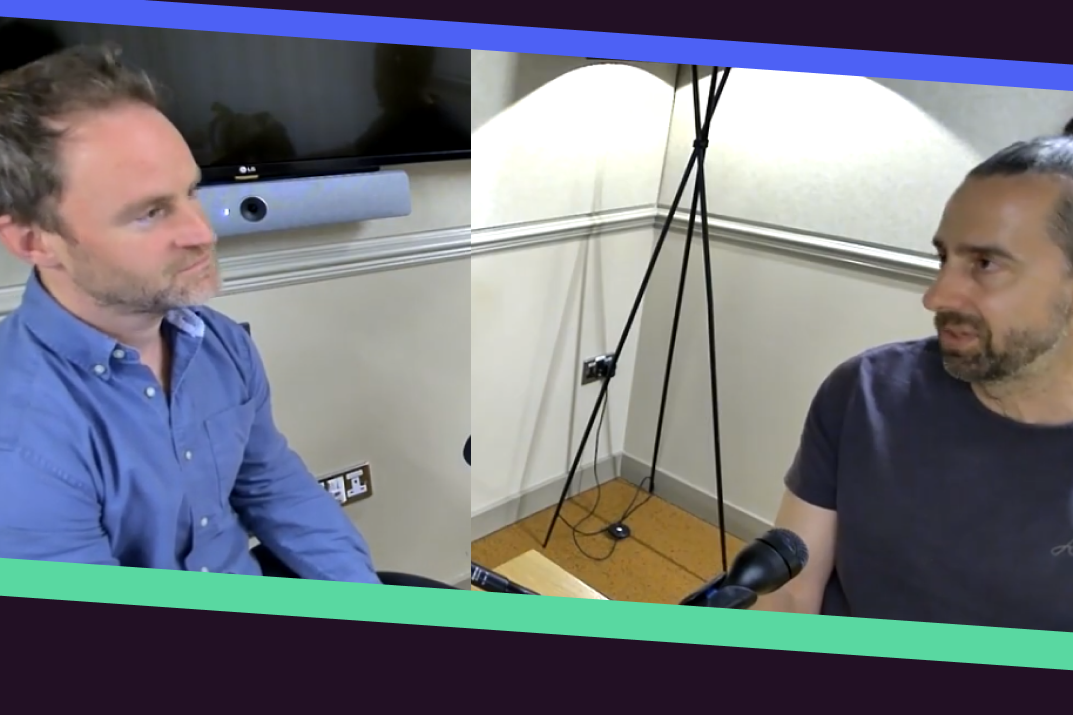
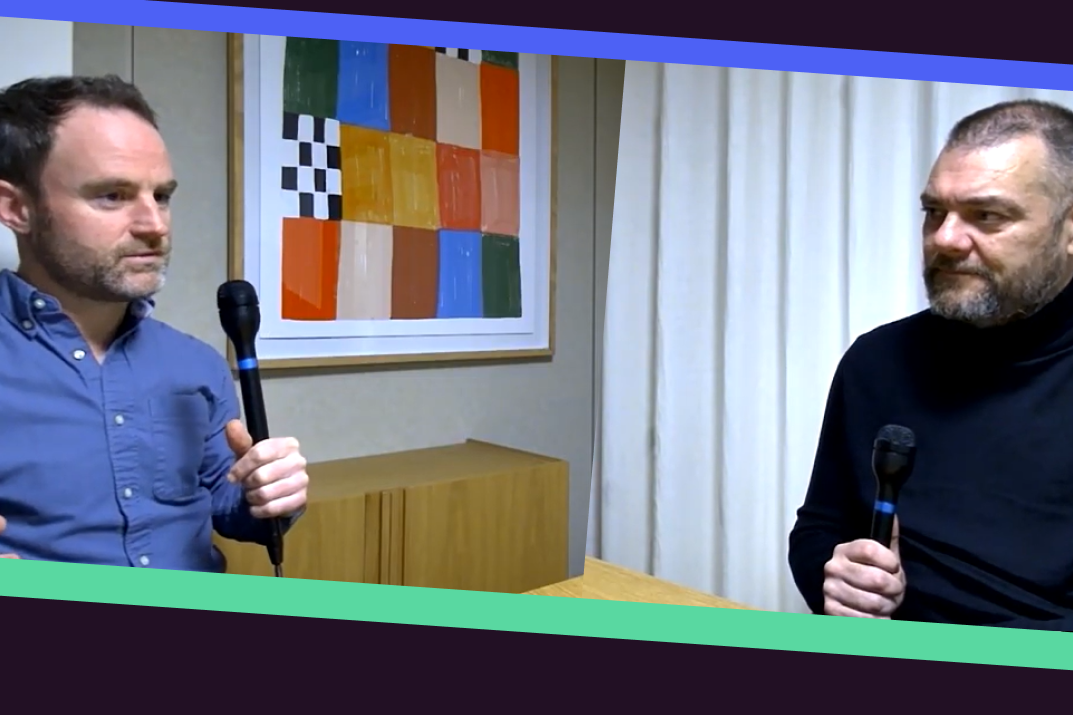
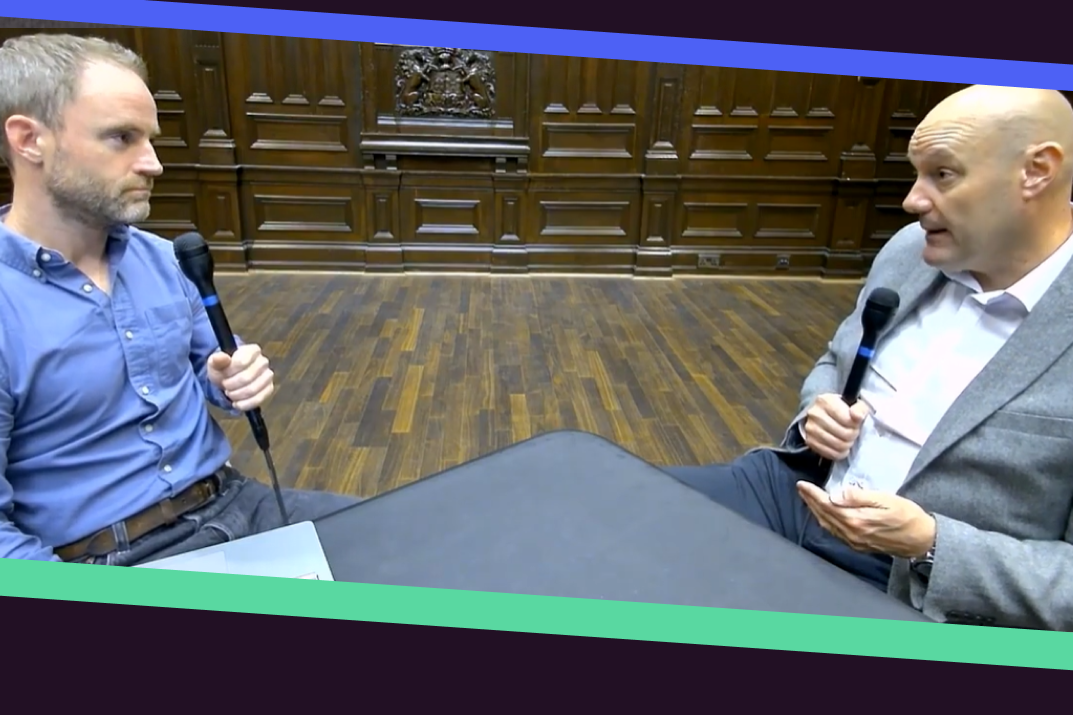
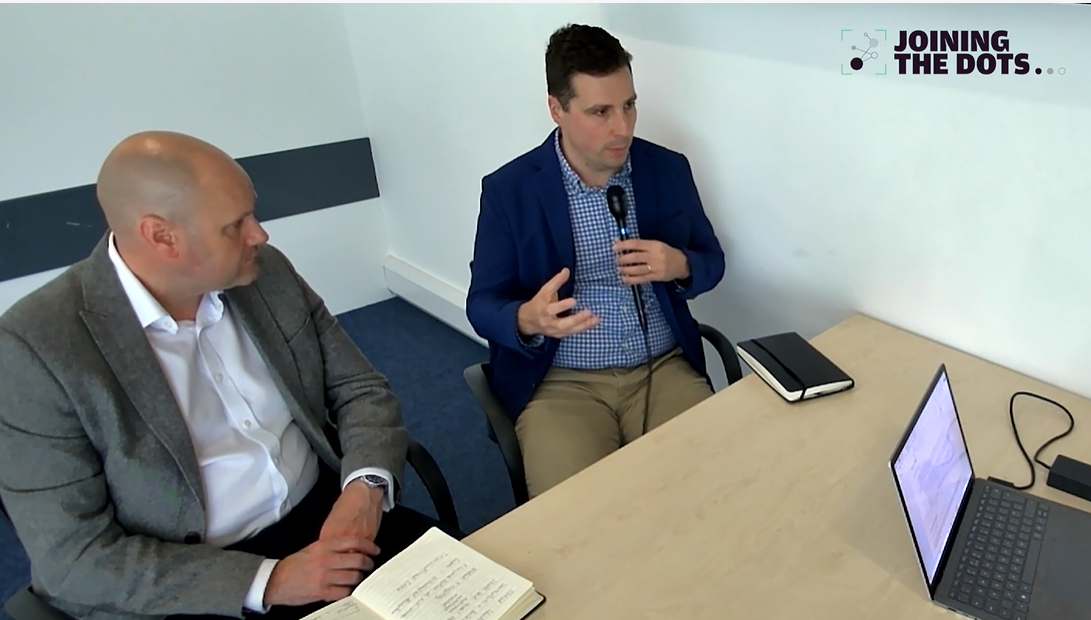
Hello and welcome to another edition of Joining the Dots. Today we will be speaking about online influence and in particular the impact it has on safety, security and society at large. I’m joined here today for this discussion by Tom Sefton Collins, who’s the founder of Ghost Shift, an organisation that specialises in online intelligence gathering and influence campaigns. Tom is a former senior operational leader at GCHQ, specifically overseeing offensive cyber and influence missions. So first of all, welcome, Tom.
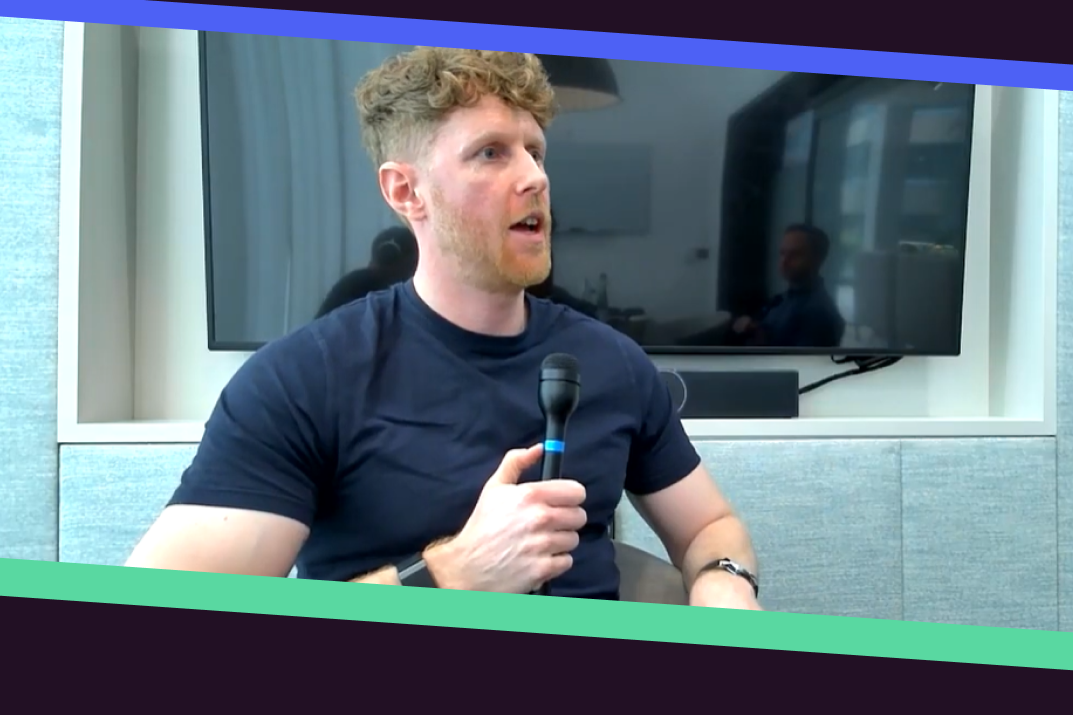
Tom Sefton-Collins
Thank you. Pleasure to be here.
Thomas Drohan
Would you like to kick off, perhaps give us a bit about your journey?
Tom Sefton-Collins
Yeah, thank you, Thomas. So I was incredibly fortunate to have an excellent career working for the UK government. I initially worked in law enforcement for the National Crime Agency and counter-terrorism policing. And then in 2015, I joined GCHQ. I worked there for 10 years, the latter five of which were spent in the National Cyber Force. And my focus throughout that time was on delivering offensive cyber operations and capability. And in particular, what my expertise was in was in the convergence between cyber capability and how you change human behavior in the online world. GoShift takes the expertise and capability from my background working in national security and applies that to scenarios for wider national security applications, but also for organisations and businesses who are trying to counter information and cyber threats.
Thomas Drohan
Okay, that’s fascinating. So with that context, should we kick off by sort of give your definition, if you wouldn’t mind, of online influence? And also maybe how do we as citizens get influenced?
Tom Sefton-Collins
Yes, so it’s a very broad definition in today’s world and I think that is part of the inherent problem and we’ll touch some of the things we talk about today. Ultimately, we are all influenced every day and we may like it or not, we may realise it or not, but everything we do in terms of communication is actually an act of influence. and it’s as simple as when you first meet someone in person like we have today, we have a chat and get to know each other and we want that to feel positive and that we have rapport and a good initial meeting and that is influence at play. We’re trying to influence each other so that actually we have a productive piece of work together or whatever that might be. That is now expanding massively into the online world and it goes beyond what many people consider to be influence in the traditional sense in terms of an influencer or someone who might be paid to do influence in some way, to advertising and large networks are used to shape behaviour in real time across multiple platforms. The content you interact with, whether that be a traditional trusted format or whether it be modern social media, memes, reels, the content we all kind of go to and associate with is actually having a subtle impact on the choices you make, the relationships you have, and ultimately the direction of our economy, our society.
Thomas Drohan
And I wonder what’s making it so prevalent, why the conversation is becoming so significant now, particularly when it comes to the wrongdoing. within our society. One minute it feels like we were talking about Cambridge Analytica and US government elections and now it just seems to be permeating everywhere.
Tom Sefton-Collins
It’s become industrialised and it’s become an economy in its own right. And what we’re seeing more and more is actually it’s moved from being kind of like a state driven activity to actually be a more democratized activity because of the revenue it can generate and because of the advantage it can leverage for different individuals in different circumstances. So at one end of the spectrum, we may be talking about influence campaigns run by a nation state actor to have an impact on our economy, on free markets, or to have an impact on our society and how cohesive it is. But the other end of that spectrum, We are seeing more and more instances of individuals who are using the online environment, using synthetic media, using increased connectivity to actually generate a working living or revenue in some sort just by conducting influence campaigns, dark marketing or dark PR, and ultimately using trends in the online environment to ensure that more people interact with their content and the things that they produce and then in turn generate them followers and revenue.
Thomas Drohan
All the social media, all of the access we have to, boundless out access we have to information, somehow we’ve created a world where extremes of opinion seem to proliferate rather than reason and all that sort of stuff. And I just wonder that that’s an effect of the current online influence.
Tom Sefton-Collins
The problem is that we have created a bit of a monster, essentially. And the internet has been such a force for good. But ultimately, we have no way of kind of putting the genie back in a bottle. There is such force behind the continued expansion and growth and development of those technologies and their integration and use in society that curve will continue long term. And there is not much that can be done to resist it. And so what has developed out of that globally is an ecosystem by which we’re all connected and we are all therefore at risk of coming into contact with material or content designed to influence us in line with someone else’s ambitions or intent. As human beings, we seek connection. We react internally on a neurochemical level to information. And where influencing the online environment is highly effective is where it generates an emotional reaction inside of us, whether that is a dopamine hit, a positive reaction, or whether it’s a sense of threat or fear and anxiety. And so the ecosystem I’m talking about is 1 which we’re all connected. There’s content available to everyone. The algorithms on most platforms push content to you in a way that’s outside of your control, but based on your past behavior. and it’s based on your previous emotional reactions to content. And so if you’ve been alarmed or upset or caused anxiety by something, you’re likely to see something similar. Those cycles exist for everyone who’s interacting with these platforms. And ultimately, when you think about the network effects of all those individuals, all engaged with content, all being caused micro or small emotional reactions, all being kind of unwitting agents are subjects and a network of influence. That’s where the real danger lies.
Thomas Drohan
A lot of that drives legitimate behaviour, right, in terms of, you know, maybe it’s advertising, it’s providing services at the right time to individuals and things. So you can kind of understand the commercial reasons why these organisations have created these algorithms that kind of react in the way they do. But I think what we understand less is we see it across all sectors, how sophisticated and proficient bad actors, criminals or nation state actors are at exploiting vulnerabilities.
Tom Sefton-Collins
It’s actually an article that’s in the FT, I think just before the new year or just before Christmas. And it raised the fact that in investment banking circles in London, foreign bankers and investors had asked legitimate questions about the safety of the UK and London as a place to invest. And whether it was a secure and safe environment to do so, to conduct business. And that was based purely on a growing amount of content online that suggests that the UK and in particular London is not safe, is actually some sort of kind of lawless environment where crime is rife. And That kind of comment in a boardroom meeting doesn’t come from nowhere. It’s being engineered through a sophisticated layering of different capabilities over different information networks across the globe.
Thomas Drohan
I’m connected into the US sort of tech ecosystem. I’m over there a couple of times a year. And my last time I was over there, I had three people separately unconnected who spoke to me with some concern around my safety in London. You know, they talked about the mayoral system in lots of our, in London, but also in our regional cities. They talked about the implementation of Sharia law and whether that was a concern for me. And they talked about, the crime levels. And I just, I had to reflect how has that happened? Because my on the ground experience is just not like that in every sense. And I kind of tried to explain that to them.
Tom Sefton-Collins
If you go and look at the facts, actually crime figures in the UK and London are actually down. Mobile phone thefts, as you point out, are up. That’s a growing trend to be concerned about, but actually the crime fees in general are down. So the perception does not match the reality. This isn’t because one person has said one thing to one of your colleagues in the US. It’s actually the result of a network of content that has been served and pushed into people’s consciousness. I was watching a reel on Instagram and I did a history degree. And so this reel was AI generated content and it was showing an individual stepping through time in the UK, going from the stone age to modern day. Generated content it showed you, after showing you all this kind of glorious historical content, was an individual, a balaclava on a bike in London stealing someone’s phone. And it really made me stop and think, you know, I was obviously lured into this video to watch it. based on my previous viewing history and the algorithm, it has shown me things that will keep me watching, to keep my eyes on the content for an extended period. But the last thing it’s shown me has been for a purpose, and that is to influence my thinking around what modern life is like in London in particular, but in the UK. And so you start to realize there’s kind of like a concerted effort there to generate this content, to understand the rules and applications of algorithms on different platforms, probably produce different types of content that resonate with different audience bases. So if someone’s interested in something completely different to history, I’m sure there’s an equivalent video you can watch where it does something similar. You know, we have a content being served with that kind of forms these baseline preconceptions assumptions. And then there’s a network of amplification of resonance and regurgitation that goes through until you get to almost like a pyramid effect where you have someone who is a prominent business leader, for instance, who says similar things about the state of the UK and how it’s not a safe place to live. And when someone’s exposed that information from different angles, from people maybe who have credibility in the business world as well as content that might resonate in the background with them, you can see our perceptions shift and change over time.
Thomas Drohan
Who are the players in the background here who are seeking to give this altered view of London and the UK? Like specifically, do you know?
Tom Sefton-Collins
No, I don’t know. I wish I did. There are many actors who would wish the UK harm in multiple ways or would wish London harm in multiple ways or would wish to create a change in our politics or our society. And therefore, showing cause and effect in this space is an increasingly challenging thing to do. But it may be someone who, for instance, has financial motive in kind of how London performs as an economy or how investments perform in London as opposed to elsewhere. It may be an actor who wants to create discord in our society and therefore bring about greater division, less social cohesion and use that to affect change in some way or reduce the effectiveness.
Thomas Drohan
Of the UK economy and all that sort of stuff.
Tom Sefton-Collins
Or just how we are with each other in everyday life and how the UK feels as a place to live.
Thomas Drohan
Yeah, I mean, if this could, even just as an objective, take, you know, half a percentage point off our GDP growth per year as a result of slightly reduced investment, slightly worse reputation. You know, that is a form of, I don’t know whether the word’s quite right, but you could see that as a word, a form of grey area warfare, couldn’t you, in terms of the modern definition of that?
Tom Sefton-Collins
Yeah, absolutely. It’s a form of economic warfare. And more and more, I think the conception of this being a form of warfare in some sort has become more prevalent. The Foreign Secretary spoke about this last year and talked, rather than talking about a series of terms we’ve used historically for kind of manipulation or influence or cognitive kind of shaping, the Foreign Secretary talked about information warfare and it being a tool that’s being used at scale to cause these kind of harms we’ve talked about and, you know, information warfare to enable economic warfare would be a subset of that.
Thomas Drohan
If you were responsible for tackling that, so okay, all of this has happened and you’re looking at that and going, well, this is not good for the UK PLC, what are you going to do about it?
Tom Sefton-Collins
I won’t give away too many trade secrets because a lot of what we do at GoShift is covert by nature. We don’t talk about our clients and the specific operations that we do to protect them from risk in that environment. But we use specialist tradecraft combination of covert infrastructure, linguistic and cultural expertise and OSINT kind of activities to identify threats in the online space, gather further intelligence about what they’re doing, how they’re doing it, go into the places where a traditional threat team might not be able to go, maybe into Discord chats or Telegram chats, and gather that unique intelligence. Once we have that intelligence, we are in a position to deter those threats and to make it more difficult for them to operate. Behind all this technology is human beings. And ultimately, the human beings who are trying to have these influential effects against us, our economy and society are trying to pull behavioural and emotional levers inside us all. They too have those same levers. And so what we try and do is look at, right, if you were running a influence campaign to degrade the reputation of London, what would make that effort and that work less rewarding, less satisfying, harder work day-to-day, and ultimately feel like it’s failing or not being successful, so you become less committed and likely to continue with it. And the same way in any business, if things become harder, they don’t make money, or there’s risk associated that you’re less likely to do them as a business, the same would apply to these sort of groups and individuals. These activities are inherently using systems that are democratized and ultimately open source and free for everyone to use. And so if a actor is using Instagram or TikTok to put out AI generated content to achieve and influence effects, they’re using a system that we too can interact with and therefore look at how they’re operating and find loopholes or find ****** in their armor of how they’ve deployed their content to actually say, do you know what, if we replicated this in some way or reacted to it in another way, we could fundamentally undermine their dissemination mechanism or the impact they’re trying to achieve. And that’s generally how we approach it. We think about the human behaviour behind it, about making it feel less rewarding and more risk. And then we look at opportunities to utilise the same techniques, tools and approaches that adversaries use and almost turn them against them.
Thomas Drohan
One of the consistent themes I’ve picked up from people I’ve spoken to on this podcast, whether that’s, related to fraud, to child abuse, to, you name the crime or you name the bad thing. And there’s a similar concept that we discussed. It’s kind of convergence, right? So in this case, we might look at threats converging. So, state espionage, cyber attacks, online fraud, money laundering, terrorist financing, human trafficking, often can be orchestrated by the same organized group who might also be in the same building, in the same protected jurisdiction. Do you see a similar Is something similar happening?
Tom Sefton-Collins
I think convergence is the word I would use. we’ve talked already about the kind of exponential growth of the information environment. It’s creating more and more opportunity to achieve nefarious goals. The convergence between how an actor achieves illegal or threatening activity in the real world and how they use the online environment to enable that is is growing exponentially, but it’s also cutting across multiple sectors. Where that probably is converging the most is, it was in the news recently about hybrid warfare and the use of criminals in the UK to conduct sabotage attacks. The purpose of that is to create instances that damage our economy, damage businesses, make the UK feel like an unsafe place to live and to operate. but it’s been conducted by criminals who are UK citizens, sponsored by or contacted by states overseas, using social media and messaging to identify, contact and influence those individuals to carry out activity.
Thomas Drohan
It may also help with the laundering of the gains they’re making from the drug, illegal drug business, from their, you know, whatever activities they might be undertaking anyway. It’ll all kind of comes into the mixing part, doesn’t it?
Tom Sefton-Collins
Does. So it becomes, if you just word a few times, but an ecosystem essentially of, bad actors who are trying to achieve different outcomes, who want to work with other bad actors to achieve different things, and the internet is providing them with a vehicle to do so. Going back to my earlier point on that we all exercise influence on a daily basis to, you know, it sounds negative, but to manipulate each other and to get the outcomes we want from life. when you expand that into a global scale or a nation state scale using the connectivity and technology we all have, it starts to become quite blurry quite quickly in terms of where the good stops, as you say, or the expected day-to-day interactions stop and where it becomes something nefarious. And fundamentally, I think it kind of goes back to human nature. And Ultimately now we’ve built a network across the globe that allows us all to be connected and allows us all to exert influence in some way at whatever scale we choose using the relevant technologies and funding as appropriate.
Thomas Drohan
You know, organisations like Ofcom are trying to navigate now, you know, when does persuasion and influence become manipulation and vice versa?
Tom Sefton-Collins
We sometimes forget that as human beings that we are manipulative and we are subject to influence and we kind of sometimes hold ourselves on a bit of a pedestal in terms of, oh, there might be content on TikTok or X that is used to influence people, but that wouldn’t influence me to do anything. And actually, what is a hard truth for us all to kind of accept is that we are all subject to influence in some way and that is manipulation and we are all manipulated in some way every day whether that’s to go and buy a certain newspaper or to live in a certain area or to buy a certain type of car or clothing brand. They’re all choices we make based on influence over months, years, sometimes decades. If we accept that as society and accept that is in its nature manipulative, then it becomes a bit easier to understand the dynamics of the ecosystem and the nature of influence as a force for good, but also a threat across our world.
Thomas Drohan
I think that the challenge here is when it when does it harm? So, if you perhaps an organisation that uses a Far Eastern farm bot organisation to target and defraud. That’s quite an easy one to say, well, that’s not good. But they use it to target, you know, a competitor with bad reviews or something, you know, that sounds pretty bad, but I don’t know if that’s illegal. or if it uses it to just, maybe just target and get some positive affirmation of its own products. That isn’t, inherently illegal. So I just wonder if you have a framework for sort of thinking through, yeah, how you tackle that?
Tom Sefton-Collins
So I think I go back to my earlier point really in that what we need to accept is that influence at scale is now part of everyday life and everyday business. Unfortunately, there isn’t a way to regulate those activities you’ve just talked about or define them as being inherently harmful, illegal or good. And so organisations need to understand and accept that every day they are being probably targeted by some sort of influence activity. It might be quite minor, it might be below the radar, certainly not on the front page of the FT or BBC News or Sky News. but it will be impacting how customers perceive their brand or perceive their organisation or just manipulating the reviews and sales on their bottom line. And where that becomes a real tangible threat is where we probably have a crisis or some sort of reputation or PR incident and it really is like how do we solve this problem of influence at scale working against us. But day-to-day, there’s almost perceptible influence going on. And organisations certainly need to invest more in how they A, understand that as a business, B, monitor and track it, and then see where it reaches for them a threshold of saying, right, this is actually impacting our ability to survive as an organisational business, or it causes a harm to society and national security. and we need to intervene or degrade it in some way.
Thomas Drohan
One of the things that we struggle with is trying to convince people of the importance of undertaking proper compliant intelligence investigation work. Rather often, as is the case, it takes a disaster or some sort of major incident for people to go, I get it. So what you’re alluding to here is often it takes that for organisation to go, okay, we get it. Now we need to take this seriously. I wonder how we get upstream of that to try and explain and educate organisations to sort of, you know, take it seriously before that moment happens.
Tom Sefton-Collins
Yeah, it’s an inherent part of the challenge. Certainly one that we feel and live as a business, but we see it as part of our role to help in that education, that understanding. I think, one really comparable area at the moment is like, cyber crime or cyber threats, whereby we’ve had some pretty big incidents over the last year, 18 months in the UK in particular. And I’m sure that the security leaders, CISOs, CEOs in those organisations would have done more in the past with hindsight if they could. And I think part of the challenge in the way we see it is trying to draw those comparisons, but for the information and influence environment. Because more and more, even in cyber threat or cyber crime, we’re seeing influence as a primary tactical driver as opposed to an exploit of vulnerability being the method that an act would gain access. And so what we started to do is use some of the framework around cybersecurity to help shape how people think about information threat as a kind of secondary or growing vector into their business. And in particular, we use the word deter. So we think about the three Ds of cybersecurity, deter, detect, and defend. Well, the way we see it in the information space in particular, there’s no deterrence taking place. And detection and defense is growing, but it’s certainly not in the place it should be. And so by trying to draw analogies between what we know about cyber crime and how we know an incident might arise, escalate and cause serious harm, we’re trying to use a comparable framework to frame thinking and growth around it.
Thomas Drohan
So an organisation might find a mechanism to score themselves for their influence risk, if you like. through various tools that you may provide, but also more generally that give them an assessment of the level of risk they may have in terms of, information manipulation that they didn’t want to happen. If we go down that sort of pyramid a bit, if for want of a better word, how do organisation, is there an organisation sort of level of this influence? perhaps we’re not looking at altering society’s view of a whole nation, perhaps we’re looking at, you know, adversely altering the view of an organisation or an individual at that sort of level. You know, can you talk a bit about how that can work?
Tom Sefton-Collins
This is where it’s a bit more hard to understand because When you kind of think about the state level and kind of state-sponsored or state-enabled activity, there’s quite a lot of research and investigation that goes into, say for instance, the weather Russia’s doing on information confrontation and how there are state agencies and then private enterprises that support state agencies to deliver that. And it’s quite well documented and understood. And the money they spend and the reach they have, et cetera. where you kind of get into more kind of corporate or organisational level use of influence, it starts to become a bit more of a dark or hidden economy. And obviously the organisations who conduct that activity or might coordinate it are a bit more hidden and covert in what they actually offer because of that risk of being embroiled in corporate espionage or economic warfare or whatever that might be. So it’s probably harder to understand the middle tier. What is easiest to understand is the lower tier, where there are, particularly in Southeast Asia, a growing number of, you know, enterprises that offer dark marketing, dark PR. You’ve probably seen videos of, you know, Android phones structured to a wall all coordinated by software conducting, you know, likes, scrolling through. Those services are readily available for hire and quite or relatively cheap to hire to support an influence campaign or some sort of marketing campaign or to create false reviews or impressions or likes. And so they will be used absolutely by some of the kind of more middle tier hidden enterprises that I’ve talked about alongside kind of discrete lobbying, other influence rumours spreading in the right circles. So going back to kind of what we talked about in terms of investment banking and investors coming to London and being concerned about it, as well as being exposed to that network of content we’ve talked about in order to reach the right circles and individuals that can ask those questions in the boardroom, akin to your example of being in the States, there will have been conversations whereby the UK was talked about as a place to invest. And a network of people will be able to push an agenda that UK maybe isn’t safe because they’ve seen X or Y video online. And so the combination of those kind of like personal relationship-based influence tactics, plus the ability to create a network underneath that using dark marketing or PR or services that are growing, frankly, in other parts of the world to achieve the mass in this space. is where organisations see the real kind of threat.
Thomas Drohan
So now is a good time, I guess, to look forward. So let’s look forward 5, 10 years. What’s the threat looking like to you? know, obviously AI being an obvious example, but you know, what’s this going to look like in 5, 10 years? And how are we going to counter this evolving threat?
Tom Sefton-Collins
You know, as I’ve said, this genie isn’t going back in the bottle, unfortunately. Like I am fully supportive of really productive conversations about the law and regulation and trying to educate our society to make it more resilient and provide the right framework and tooling to make sure that we can understand influence and understand nefarious activity online and address it as a society together.
Thomas Drohan
That’s sort of a 0 trust attitude and all that sort of stuff.
Tom Sefton-Collins
Yeah, I think so. But I do worry that, despite those efforts, that this beast we’ve created in the internet and the innovation it promotes and the funding that sits behind exponentially growing technologies means that we are on a pathway that really cannot be addressed. And we’re seeing rapid advances every day in how we can generate content very quickly and at scale to achieve things that were kind of the work of CGI and blockbuster films. only a few years ago. We are going to be creating more and more virtualized digital environments for us as humans to interact with. And those environments will seek to manipulate our behavior in some way. They’ll seek to give us a dopamine hit, make us enjoy ourselves. They’ll seek to cause us fear, anxiety. They’ll seek to help us relax or switch off. But our interaction with the internet and applications and generated environments will only increase. And that provides more and more opportunity, as I see it, for threat actors to inject their ambitions or their intentions into that space. And we’re seeing that already in the gaming world. Games are being created that push a certain political or geopolitical agenda. And particularly in Russia, we’ve seen that recently about Russia-Ukraine war and glorification of Russian military activities in a gaming format against Ukrainian forces. And that is just one example. But as our platforms become more and more democratised, as individuals have more and more control over the content we create in those platforms and the ability to generate content at scale increases, I think we’ll see a growing problem of how we interact as humans more and more with digital technology, immerse ourselves in it, and actually how that shapes our behaviour. And one of the ones, going back to kids that I worry about, for instance, is Roblox. You know, a kind of multiverse of games in one platform, very little understanding of what is going on in the gaming environment and what is shaping children’s behaviour. It is completely conceivable to me that there are games on Roblox, for instance, that have a subtle influential effect. on young children and how they interact with the world and how they understand the world. And there is regulation of that platform. There is stringent efforts to protect children from direct harm. But actually, how is the environment they’re interacting with shaping their behaviour longer term? And there’s nothing to stop a bad actor creating games in that environment. So I think we’re on a pathway that needs greater attention. Also trying to mitigate some of those harms where they arise and not being passive to how they evolve, actually trying to shape and respond to them.
Thomas Drohan
Yeah, I mean. Absolutely agree. I wonder if we did go a little bit into what, are the things. So there’s obviously, there’s education, there’s empowerment of individuals to identify, A, when they’re being manipulated or persuaded, and B, to understand the environments where that may be happening. And then there’s, you know, government that can regulate and, you know, maybe force organisations to watermark content. So it’s a clearly, it’s always very clear when it’s generated and various disclosure rules, all this sort of stuff that the regulation I think can play a part to. And then there’s the bit that everyone really worries about, which is the, you know, the half dozen dozen individuals in the world who basically control this whole evolving world. the optimist might say, these individuals don’t want their platforms to be a place where abuse can happen. So they’re commercially incentivized to tackle harm and safety. And therefore, and also these tools, if they are very good at interacting with people, they will be very good at identifying the early warning signs. They might actually be better than humans at spotting these risk factors and highlighting them. But again, the pessimist view of that is yes, although that may be true, but are these people not prioritising commercial gain? Where do you sit in that sort of?
Tom Sefton-Collins
So I agree with pretty much everything you’ve just said. I think that the challenge we have is that increasingly our perceptions of kind of good and bad are becoming subjective to our own environment. And I think what we’re seeing across the globe at the moment is a greater fragmentation of what appears to be good values-based activity and what isn’t. And therefore, our expectations from a platform that we might interact with, so say it’s an AI tool provider, as a liberal democratic society may be different from what another society would expect or demand of it. And If we were only talking about, say, the UK and Europe, I think it would be plausible to think of a future where, yes, there is an exponential growth in tools, capabilities, software platforms that we all interact with, but there is some form of technology within those that helps us understand what we’re interacting with and can tell us, you know, or police it in some way. And I certainly wouldn’t be opposed to that, you know, say you get a message, I give the example, the content on Instagram earlier, if there was a message alongside that told me what that video was trying to achieve and what was hidden or subtle within it that I might have not realised. And that sounds good in principle. What we’ve talked about today a bit is like human nature and the transactional nature of engaging in social media, etc. And when you’re doom scrolling or flicking through videos on content, is that going to resonate and allow people if they’re given a warning or there’s some sort of pop-up or something? It doesn’t feel inherently like human behaviour at the moment to me. And so, you know, I’d welcome technological developments, I’d welcome education and, you know, helping people understand what they’re interacting with and why and what the problems and potential pitfalls are. The challenge that I see is that, you know, big technology companies predominantly aren’t based in the UK and Europe and they’re based elsewhere. And increasingly, those societies have divergent values and views from ours. And that creates a real tension for me in terms of if it’s, you know, solely commercially driven and therefore the kind of policing and response and self-regulation is more neutral as opposed to being proactive and driven by our values. then we’re less likely to get it and see it, I think. And so I think that’s why I refer to kind of, we’ve created a bit of a beast in terms of the economic pressures and the technological race that we’re in, particularly with AI. It’s pushing us towards a future really that is, you know, not one where we look after individuals within that system and help protect individuals. It’s one where we try and create the best tools and capabilities and applications and generate the revenue from them.
Thomas Drohan
Yeah, I mean, I see that. And that’s this fragmenting is obviously the I can be more specific, I suppose, but there’s obviously the US sort of approach to regulation, or at least with the current administration and the current sort of tech ecosystem that’s there. There’s the EU, which, you know, in theory, the UK may somewhat mirror and maybe Australia and various other nations. Then there’s the Chinese a sort of model, and it’s competition with the US. And then there’s kind of, the Indian subcontinent, Middle East, all these people have slightly different approaches, different values. So it feels like there’s like an upcoming fragmentation. I think the thing that I would reflect on, I first made this reflection about two years ago, and it’s just obviously true now. I said, I think that my son, his seven-year-old son, I suspect as he grows up, he becomes an adult. I think one of his closest confidant will probably be an AI. Like, I didn’t want that to be the case, but when you think about it, and as if you think about that world and then you times it by 10 in terms of, the how amazing augmented reality and virtual reality and digital worlds are, and will become, we had the commissioner for the eSports Integrity Coalition, basically the regulator for global eSports on the podcast similarly a couple of years ago. And he talked about this community of 4 or 500 million people who spend the majority of their time in a digital world. either spectating in sport or interacting. And they are at that bleeding edge of where society starts to work online. And there’s a lot of bad stuff happening in there. So it’s already happening. And then you overlay deep human understanding, you know, the concept of a country of geniuses sitting in a data centre that can, you know, be used for good, but also for bad. Yeah, you’re sitting here going, What’s that going to look like in 10 years, and how do we counter that other than education and policy and regulation and maybe praying that technology organisations take this seriously?
Tom Sefton-Collins
Yes, it’s a fairly bleak picture, isn’t it, when you paint at art? And I kind of echo your sentiments. I think part of what we discussed is at least stepping back a little bit and being able to kind of look at the future or look at the current situation and say what is really going on and what does the future look like and therefore start to at least regulate it from your own perspective, whether that be in your own family or whether it be in conversations you have with friends or co-workers, whatever it may be. But there is something definitely about stepping into this world we’re creating with some degree of trepidation an understanding of what it’s potentially evolving to and what tools we all need to navigate that world, whether from an individual perspective or whether from a societal, economic or organisational perspective to stay relevant, to look after ourselves, protect our interests. And whilst it doesn’t necessarily feel like a hostile world we’re building in terms of more content and more virtualised environments, the ability for it to be used for harm grows exponentially alongside the technology. We need to take big steps.
Thomas Drohan
I totally, totally agree with that on that note. So that just leads me to say thank you very much for taking the time to do this. I find it really interesting.
Tom Sefton-Collins
Thank you. Appreciate you having me. It’s been a great discussion. And yeah, thank you for having me.
Thomas Drohan
Yeah, thanks, Tom.
Speaker 3
Thank you for joining us on this episode of Joining the Dots with me, Thomas Drowan. We hope you found today’s conversation practical and insightful. If you enjoyed the show, please subscribe and leave us a review on your favourite podcast platform. It really helps us reach more listeners like you. Stay tuned for more episodes where we continue to uncover the stories of those on the front line of justice, harm reduction and global security. This is Thomas Drowan signing off. Thanks for listening.