Thomas Drohan
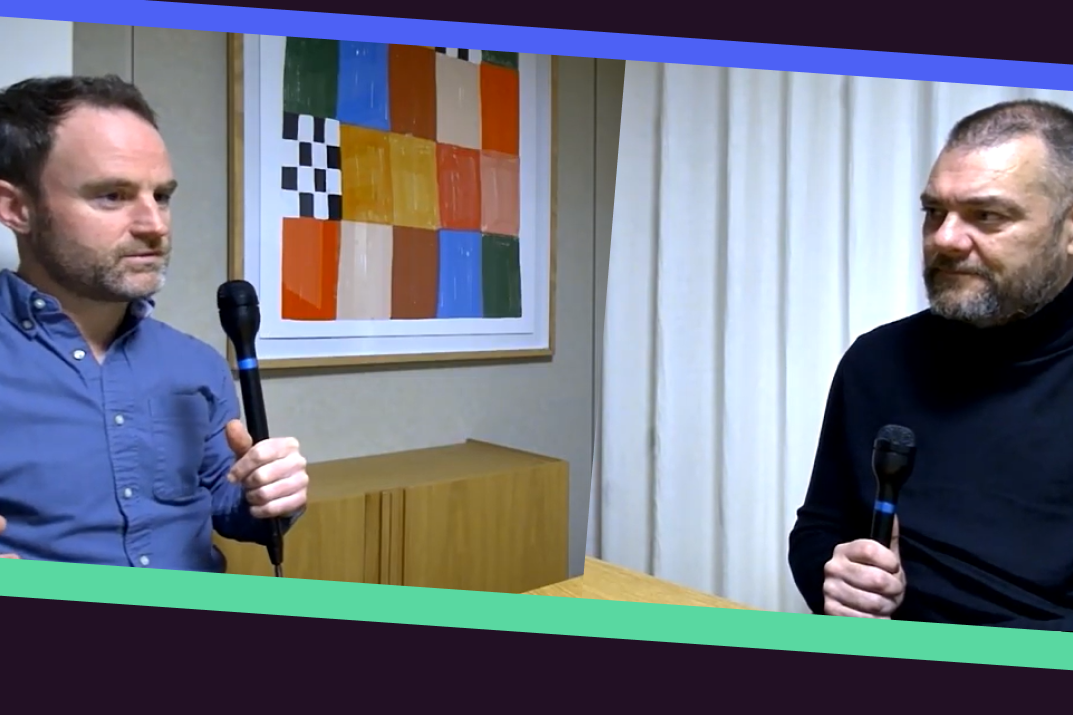
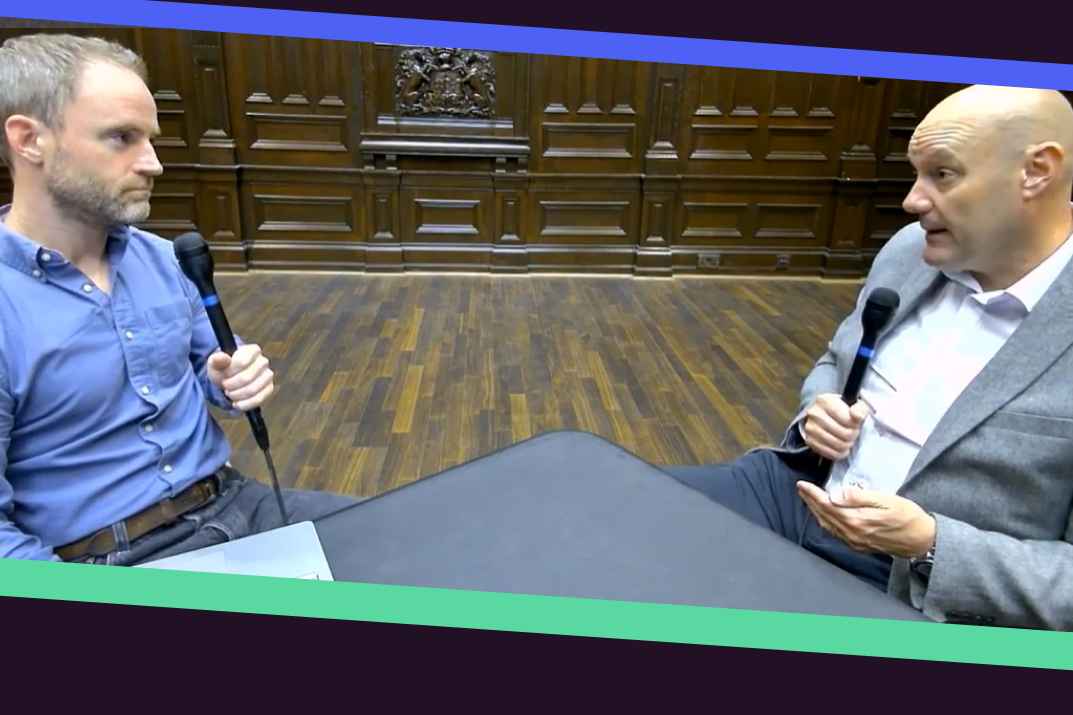
Welcome everyone to another edition of Joining the Dots. Today, delighted to be joined by Tony Sayles. Tony is an ex-criminal and fraudster, pretty prolific criminal in his day. now is co-founder of We Fight FinCrime, formerly We Fight Fraud. And yeah, we’re delighted to welcome you. Welcome, Tony.
Tony Sales
Thank you. Thank you for having me. Good to be here.
Thomas Drohan
As always, the plan here is to open up initially to you, Tony, to give a bit of your story, a bit of your background. I’ve got a few questions that will be linked to that, which we may come to. As I said to you earlier, it’s probably limiting the number of questions. There’s so much that we could talk about off the top of my head. And then we’ll end with that sort of crystal ball gazing, what’s happening out in the future, which again, I’ve got a load of thoughts on. So let’s see how this goes. And yeah, so should we kick off? Over to you, Tony.
Tony Sales
Yeah, sure. So I guess I was branded as Britain’s greatest fraud star. First and foremost is I’m never proud of that title. It’s what someone else says, yeah? Like, what does that even bloody mean anyway, yeah? And it’s certainly not something I could ever be proud of, right? So, but it kind of gives you an understanding of what I’ve kind of done if they gave me that title, I guess, that, you know, at a very young age I was loaded into a pub by my uncle that, I’m being brought into criminality. Crime’s changed a lot now, but back then you went through, if you as a kid like me that was on a council estate that, is surrounded by loads of other different types of kids that have all got their own issues going on, you tend to congregate together and kind of do other little bits and pieces, stealing car radios, it all starts keeping watch, doesn’t it? You know, like for kids back then, my age, you get caught, we used to call it So you keep dog, see what’s happening is the older boys would smash the car windows and get the radios out and we learnt a trade of doing that. And then you elevate it to stealing cars, you learn how to steal cars with different tools, slide hammers. But all of those things for me, they were kind of like, they were quite physical things. physical crimes that you get involved in. And I had a natural kind of, I don’t want to say laziness because it’s not a laziness thing, but I had a natural thing. I didn’t want to get my hands dirty and so fraud just seemed to fit very well with me. I had different bits and pieces of my life and that just ends up spiralling out of control. It takes over my life till I finally come out of prison in 2010. after serving a prison sentence. I’ve been on the run for six years previously to that and just kind of had enough. I’d realised all the bad stuff I’ve done throughout my life, all the things I’ve been involved with, they just lead to a dark place. And if you carry on doing that kind of stuff, I’m going to push what I’m doing onto my own kids. I changed my life. I changed the way my family’s life would have probably panned out if I’d have stayed in that world. I’ve achieved something as a father. Everything else that comes after that is all bonuses, you know, and that’s what it’s all about. But making them proud of what I do is important. I was a traumatised kid and I have to relive that trauma every time to express it. Even when I do testing, it all plays in because it’s what makes me different as a person and gives me what everyone talks about, which is the criminal mindset.
Thomas Drohan
Yeah, and I was interested in that. One of my sort of initial thoughts we’ve just been speaking about is what are those skills that you’ve got that just make you a made you a particularly good criminal and now also those similar skills that make you effective, you know, in terms of what you’re doing in terms of counter fraud and counter criminal activity.
Tony Sales
Well, I think that With crime, it always evolves quickly, and it doesn’t have the restraints of what society and corporate certainly have. So it’s able to evolve, adapt and move into different types of places. That’s why it probably always feels like we’re behind, right? And so as a criminal, you’re always looking for those opportunities and growing up in an environment where you’re poor, and you’re looking to make money. I was always looking to make some bit of money somewhere because I wanted a new pair of trainers or I wanted a flashy jacket. It’s all the same drivers, all the low self-esteem stuff. And when you’ve lived through that, you learn opportunities. And so opportunities come in multiple different forms, but you learn to monetize them criminally monetise them when they come. And so spotting those opportunities like most criminals, yes, in the moment, yeah, and that’s what is different. Tech’s good, but naturally our human side just lets us down. And that’s all criminals are ever going to exploit.
Thomas Drohan
Yeah, and another thing I wonder whether you have as well, and we see it in the tech industry, is just, and the modern way of talking about it is being a bit more neurodivergent. So you can support. you can spot patterns, you can identify, you can focus for longer than other people if it’s in certain areas where you can just, you know. So is that a skill you have?
Tony Sales
I totally have it. Yeah. So I think the day before yesterday I’ve done 18 hours straight on an ocean. Yeah. Like 18 hours straight. It’s not normal. Yeah. But it reminds me of when I go back to when I was criminal. I sat for 24 hours straight making my first utility bill because I wanted to make it look perfect and understand all of the stuff that was behind it, right? So I’ve always had that skill.
Thomas Drohan
Yeah, and honestly, it’s part of the sort of entrepreneurs tech startup mentality, right? There’s so many parallels which is around, you know, resilience, problem solving, iteration, acceptance of failure. You know, it’s like, as I say, the more people I speak to in this area, There’s so many parallels between effective criminals and effective entrepreneurs. It’s interesting. So one area I just wanted to talk about quickly is a bit about the evolution of crime. So our company kickoff in January. I put together a slide and there were two pictures on it. One picture was a picture of Mesopotamia in 2500 BC, which was in particular reference to the Code of Hamurabi, which is the first sort of accepted, documented set of rules that govern society, right? That was on one side of the slide. On the other side of the slide was a multi-planetary existence, right? The sort of thing that you think that Elon Musk might have for us in 40, 50 years or whatever. And clearly, enormous differences between those worlds, right? So, we can touch on it and technology and all sorts of things that are different between those worlds. But I think also so much similarity in terms of the human psyche, right? there’s going to be the same human urges in there around, jealousy, gluttony, greed, all these things, corruption is going to be there, fraud, it would just be in a different form. I just wonder with your background and both sides of the fence and through your career, how you’ve seen that play out in the real world.
Tony Sales
I think it’s, you know, if I go back to the first ever presentation that I gave, yeah, in 2012, after I’d come out and kind of Vice had made a documentary about me and we’d kind of realised by then that I was saying different stuff to what other people were saying in the industry. It’s still, that documentary was groundbreaking and still is. Yeah, Because we showed things that had never been shown, like the 419 black money scam has never been shown ever. And it’s shown in that documentary because we was able to reach out to them and get to talk to them and understand what’s going on. And I guess that The evolutionary part is obviously we’ve had crypto, the whole digital space has crept in from where I first started. It was there, but now it’s much more prevalent. And so going back to that presentation in 2012, it was really easy for me to build a social engineering threat into the landscape here, because no one at that point had even spotted it or said it. There had been no bank calls. No one had actually done any of that stuff back then. And I just came up with a a way that I could get someone’s information from a very bad internet provider, yeah, of where we just set up, we pretended to be a coffee shop. But what I did from that was I took the data of the person and I looked at what the data was, right? And once that person had logged into their supermarket account, I started talking about tokenization, right? And people at the time were I said, you will tokenizing the debit and credit card information. How many of you are tokenizing the phone number? Because that’s where I’m going to go. And then I show me going to socially engineer the person over the phone and how I lure them into ultimately stealing their house at the end of it because I divert their mail, I get them to pay for it. And just by showing just like little bits and pieces of what could happen. And you know, then of course, if you then look at what APP fraud becomes, these things spotting them is obvious because if you want to get round something that a bank or whoever it is, a retailer, whoever it may be, has put in place and it’s held in a tech position, The best way to do that is to take that offline and now become human with it. And once you start interacting with the human, greed, gluttony, fear, panic, all of those things come into it to be able to press people’s buttons. And of course, as digital grows, the vulnerabilities widen. So you start getting all different types of social engineering attacks. And of course, phishing. is social engineering, just because we’re reading words off of a screen, it’s still what’s been written by someone else targeted towards a whole mass market of whatever, and it’s all social engineering. We all still want to blame Facebook and Marketplace for all the frauds because they originate from there. But let’s look at the actual problem.
Thomas Drohan
I think it’s really easy nowadays to see, you know, cyber enabled fraud or crime as a product of your phone. And then, you know, the obvious things you go to is you go, well, it’s just these fraud boiler rooms right out in Nigeria and, you know, Thailand and all this sort of stuff. And obviously that’s a problem. But I think increasingly, it’s back to what you’re saying, it’s this human element, right? So the story that I always remember was this cyber consultancy, they do pen tests and stuff, and you do those sorts of pen test stuff. And they were telling me they were speaking to the CTO of this tech firm, and they were going in there to do a bit of an audit. And the CTO was there going, yeah, we are really hardened in our systems. You’ve got all these security certifications. We’re really proud of our security stance and posture. Look at all this amazing stuff. in a sort of alpha male sort of way, I’d be very surprised if you’re able to find any vulnerabilities. Two days later, he walked into one of the regional offices, plugged in a little computer and extracted data, and went back to the CTO 2 days later and said, well, yeah, I mean, I’ve got into systems and here it all is. And the CTO was like, you can’t do this. is not what, this is one part of the brief. this is actually criminal activity. How dare you?
Tony Sales
On a pen test, someone sneaks in through the reception desk with their face quite barely open on CCTV. I don’t really count that as a criminal attack. I’m coming in through your roof where your cameras can’t see me because real criminals never want to be seen. You know, we get over carried away because what happens is corporates try to put everything in their own silo. Right. And it leaves you vulnerable because criminals don’t think like that. They really don’t look at any business in a silo. They look at opportunity and how they can attack it. And that’s it. Yeah. So if they get into your systems, they’re coming after your NDAs because that’s how you put pressure on a ball to give you a ransom.
Thomas Drohan
Yeah, it’s all well and good having, you know, compliance and, you know, ticking boxes and having secure systems and, you know.
Tony Sales
It’s not going to prevent me. And what is it you’re trying to prevent? Are you trying to prevent a pen tester who gets paid by one of the big four to walk through a door that they do day in, day out? Criminals ain’t doing that. What are we testing for? And it is just tick boxing. Decent, hardworking, honest people. making a rule set for people that are outside of the rules, yeah? It doesn’t work. And the proof’s in the pudding, like any company that says, yeah, we know, I’m publicly saying it now, we’ll test anyone, yeah? If I can’t beat you, the test is free. But if I beat you, we double the price. How’s that? Most businesses already have a robust process that’s just not followed. Like the cleaners letting people in at 6:00 in the morning with a cap on and every single time we’ve set up to go out testing, we’re successful and that’s not good.
Thomas Drohan
You look at like some of these major sort of, you know, ransomware and various sort of things that happen to people like Jaguar, Land Rover and you name any number of big corporates. And everyone goes through the trends, like what happened? Often it’s entrepreneurial criminals spotting vulnerabilities. So, you know, you didn’t update this security product, you realise you haven’t updated it for two years. Yeah, it’s just stuff like that. It’s like it feels like there’s a whole load of quick wins or own goals that need to be consistently tapped even before you get to the sort of slightly more.
Tony Sales
What budgets? No one likes to remember, yeah? Like all that stuff costs money, right? And it all comes off the bottom line of what a company’s paying, right? And we have to get into what budgets It has to be allowed now. It has to be part of it to understand it. Most businesses don’t even know who’s got access to what. And that creates vulnerabilities within itself. And so when I’m doing stuff, I’m always looking for a way in where I can’t be seen, like I said. Because that’s the most dangerous of attack for anyone. Because if I’m in and out and you don’t even know I’ve been there, that’s when real true attacks happen. Because that’s like Hackers get into systems and stay in there. They don’t just go in and go, oh, you haven’t got you.
Thomas Drohan
No, of course.
Tony Sales
That doesn’t happen. Yeah, like they’ve been in there for a while. Actually, sometimes pulling them out can be quite dangerous because they’ve set lots of different things that are going to set off that will ruin the system as you come out anyway.
Thomas Drohan
So just changing tack a little bit then, I just wanted to talk a bit about youth. vulnerability, right? I know you’ve got kids that are older than mine, but I’ve got kids as well. you set the scene a little bit. There’s like, there’s things like adolescence that’s been on TV, you know, with Stevie Graham. There’s obviously the world feels like we’re getting closer to some levels of criminality when you think about the mobile phones being stolen in London. Everyone has got someone who knows someone who’s had one stolen. It feels like it’s becoming more real. I just wondered what’s your view on this and as it’s evolving and how do we as parents and a society start to think about tackling it?
Tony Sales
Artful Dodger has been around for however long. It’s this age-old story, there’s no change. That was a young group of kids that went around stealing stuff, pickpocketing and doing a whole range of different types of crimes. We just see it more now. People talk about it more now. media side of things plays into it. So the drivers for the younger generations are they’ve got, they trust in the social media platforms. They might see an advert, whether it’s a real advert, a deep fake of someone pretending to have cryptocurrency or whatever it is. When we talk about get safe online, We talk about clicking links and we talk about making sure that our browsers are secure. Yeah, we have to understand actually the information that we share about ourselves, the things that we give over informs and it’s become so normalized now. And that’s a problem that we haven’t solved. Younger generations now in their environment, it’s a different world for them and a lot of their world exists online. So it’s quite easy for them to find themselves just trying to make a few quid here by getting someone’s account to use, or, and then they get lured into it, and then maybe they escalate, it escalates, just like, it’s about understanding what their migration looks like and how we can help them. I don’t think any of them want to be committing crime. They’re probably scared of committing crime in that way. I don’t know how we approach that. We can teach financial literacy in schools, which I’m a big advocate of. The world’s changed, you know, for them it’s changed. And we have to be adapting, understanding how they might be feeling, talking to them, that’s what we can do with activities, understand how they’re feeling in the moment.
Thomas Drohan
Yeah, OK, brilliant. So, Tony, final question before we go into a quick crystal ball session. I just want to go up the hierarchy a bit, right? So, and this might come through, but you know, at the sort of lower end, we’ve got a lot of the, you know, the sort of, as you said, the youth criminals go up a level and you’ve got sort of, you know, people who are controlling small cells of people, maybe. you go up another level and you’ve got the sort of more hardened criminals from the way you found yourself in your career, that might be into a whole number of different types of crime. I suppose becoming quite relevant to our podcast, what are these people like and how do we catch them?
Tony Sales
At the top level, you’ll never catch them.
Thomas Drohan
Okay.
Tony Sales
They’ve got money, they corrupt, they infiltrate, It’s like anything, it’s quite hard to catch the real top of the tree people. They’re normally very clever, got extreme amounts of money. They’re never seen in the public eyes, never actually them that hands on anything. Getting them is really difficult. I mean, I guess Encro chat was probably the, you see like a layer of people get taken out. I don’t know if you saw the…
Thomas Drohan
Yeah, so Matt Horne, who works for us, he was a gold commander for that, for that, for that case. And yeah, and I’ve seen the documentaries. Yeah, the documentary where everyone was just crazy top end criminals.
Tony Sales
Yeah, like so, but I think the top layer, they don’t use devices. So you, by nature, criminals are secretive at the highest level. They’re extremely secretive. They don’t talk to people. They walk about talking like this. They’re not, they’re aware of all the threats and vulnerabilities that could be coming to them.
Thomas Drohan
So we’re in this world where they’re really well informed, really, really sort of distanced from the actual real life crimes. It’s difficult to pin anything on them. But, they’ve got the same, faults and ambitions as normal humans. They’ve got greed. They want to, often they want to, look like they’re successful. There must be ways that we can sort of, join the dots and find them.
Tony Sales
But how? Like, look, that’s like saying we can find money laundering in the bank account. Can you? Maybe if you’re looking for it and you’ve got a case that’s existing, You can’t just ping a bank account and find money laundering because what would you be looking for?
Thomas Drohan
Yeah, I just say like usually when there is the odd case where maybe a criminal kingpin has been brought down, there’s usually breadcrumbs, isn’t there? There’s usually, oh yeah, you know, we’ve been tracking this person, they did something over here, they did something over there, we’re a bit suspicious, they’ve spent time in Dubai, they’ve been, you know, this and that. There’s usually a profile of some of these top people.
Tony Sales
We might know who they are.
Thomas Drohan
Or are you saying there’s this whole world that we just…
Tony Sales
Just saying there’s a whole world you don’t realise, like, you know, and like if that’s people don’t realise that whole world, you know, it’s like there’s many and there’s many different people involved from many different countries that, you know, Like the old Cray days have gone and they went long ago.
Thomas Drohan
We spoke to someone from the NCA came on to the podcast who was talking about this Russian money laundering operation based in, they’re based in Moscow. They’re in a big skyscraper. First, they’re in the first few floors. The floors above the Russian government, the floors above that are part of it. Yeah, they’re just deeply embedded. They’re protected.
Tony Sales
And nowadays they’ll be. loads of that money finding its way in different places, being used in different places, because the trade doesn’t stop. Nothing’s stopping the trade, and that will continue to be the way I think forever. Like this, you know, I’m always worried about people that you don’t know to the ones that you do know. That’s more terrifying to me.
Thomas Drohan
Yeah, Now let’s go into a bit of crystal ball gazing, so 2035, what are the threats? Where are we going to be?
Tony Sales
What do you think? I think there’ll be AI and deep fakes that are ruling the roost. For me, it’ll be, they’ll be targeting consumers in multiple different ways. And it won’t just be, I think probably businesses already using like agents, right? So you’re already using these types of agents. So I know someone that uses an agent to gain work for their roofing company, for instance, and when the person goes off and they think they’re talking to a person, they’re actually talking to a chatbot. That’s why I think the opportunity really exists for deep faking, for being able to do all this chatbot, pop up a business, make it talk to customers, lure them in some way, and there’ll be multiple different types of things and ways that they figure out to do that. I think that there are no new scams, right? Everything’s just an old scam with a new spin. It’s either the delivery mechanism or the tech that enables it, yeah, in a different way. We often hear things are getting more sophisticated. I guess the tech’s getting more sophisticated. I don’t think the way of delivery is getting more sophisticated because we’re all used to talking on our phones and video calling now anyway. non-clicks will become a big thing I think we need to really think about.
Thomas Drohan
And what are non-clicks for the benefit of listeners?
Tony Sales
So traditionally, when a phishing e-mail comes, you might click on it and it has a link. It asks you to put your name, password, e-mail address, all the stuff that you might want to either log into this platform that it’s asking you to come to or to sign up to whatever it wants you to do, right? Non-clicks don’t need you to do that. They can be delivered to your phone, to your e-mail. You don’t even know it’s there and you’re broken.
Thomas Drohan
So this criminal has got my details and they’re now targeting me in any range of different fraudulent ways.
Tony Sales
Yeah, once they’re in, yeah, and then once you open up whatever it may be, It doesn’t need a click, it doesn’t need any of that. It starts working its way through whatever you’ve got. I think we’ll see much more of them, you know, because these tools are, they’re made by foreign states, by us, but we do this stuff to other countries, they do it to us, and then they find their way onto the dark market, right? And that’s where the problems start to exist and come alive. And then it starts to threaten the rest of all of us because of what’s happening. And I’m sure we’ll get good at finding ways to defend against them, and tech will make something that picks them up when it comes in, but the criminal will always adapt, find a way round, like we always say.
Thomas Drohan
Yeah, I think you can see a bit of it happening already, can’t you say like this nation state stuff, loads of resource, so they can do some pretty sophisticated stuff. But as technology is developing, it’s going to democratize, and it’s going to become easier to do some of these things that are currently sacrosanct of the state, just criminals and individuals will be able to start using these tools. It’s a bit like the other analogy. You can often track what’s happening in the private sector and transfer it to what’s happening in the world of crime. So the big thing at the moment, if you look at, you know, as a tech sort of person, you know, the big question is when’s the first solo billion dollar company going to be created? So the one person with a product and an offering that’s just literally AI agents everywhere and it becomes worth a billion dollars. That’s the holy grail at the moment.
Tony Sales
Yeah, wow.
Thomas Drohan
Right. So, that’s then it’ll happen in due course. There’ll be some killer product.
Tony Sales
Yeah, something will happen.
Thomas Drohan
You just take all of those same principles and are empowering one pretty bright tech literate criminal. Same, same, same outcome, isn’t it? And imagine, imagine hundreds of thousands of them all around the world.
Tony Sales
Yeah, I mean, and that’s the change in crime that we were talking about as well. So you had like, Batman I was young guy, there wasn’t online. You had like, you very much knew who the criminal fraternity was. Once the online faction got involved, I mean in the beginning it was very separated, right? Like it’s kind of like a real separation of stuff. And then as we got Silk Road and all these other places where we can go on the dark web to find other different types of groups and forums. Because remember the internet was all about forums and chatting back in the early days. It wasn’t about a lot of the things that we do on it now, right? So yeah, I mean I think I totally agree with all of the foreign state staff. I think consumers will always be victimised. They will be continually victimised because they’re always the lowest point of knowledge. So if you’re a criminal, it becomes rich pickings in multiple different ways.
Thomas Drohan
Like a year ago now, we had a chap called Ian Smith. He was the commissioner of the eSports Integrity Coalition. So he basically the sports governing body for eSports. So there’s like hundreds of millions of people who play and are involved in sort of various types of online gaming, e-sports, and that sort of stuff. These people are just a indication of what’s to come, because basically they spend more time in a digital world than in the physical world, right? And it gets to the point where many of them, and it’s first-hand experience, so it’s like, you know, eating is a chore, because you’ve got to get off of your, digital life and go and do that, right? And as it gets richer, as that whole online digital augmented visual experience improves and the camaraderie and the AI that’s building around it, lots of people are going to be spending much more time, it’s inevitable, in a sort of digital world. So therefore you think, well, okay, back to your point around the volume of threats that someone’s going to be exposed to in that environment is going to be quite high. I suppose the optimist in me, and I think you’ve talked about it, is the very same tools that can spot a situation uncovering, like you’re trying to spot my vulnerabilities and therefore understand how you might target me. If there is an AI or technology that is sort of observing this.
Tony Sales
We just want to just, we’re not actually using true AI yet, you know that, right? This is just LLMs.
Thomas Drohan
Yeah.
Tony Sales
Okay, this is not, this is not, this is Not true AI yet. Well, it’s a common misconception within the industry. Like, I don’t ask the real techies that are the top that are doing it. Well, because it’s just not, you know, like, so it learns. So if you talk to Gemini, for instance, right, and you call it out, I’ve called Gemini out a few times, ChatGPT, you can catch it out, right? It’s not live. So it can’t adjust what it’s telling you in the moment. It has to be bounced back to others that sit there and govern what it’s going to say, what the rule set is that it’s building around it. It’s not live. It learns, right? So true AI to learn your responses. I as a human in the moment, I see your human vulnerability. I see your watch. I see all of it. Your computer open, no lock screen, all of it, right? That’s got to be bounced back to an AI that learns all of the other rule set that needs to be put in because it’s not true AI. So that’s what I mean by that. So let’s understand when we’re saying that stuff of what true vulnerability looks like and what it can spot because it can’t definitely spot human vulnerability at the moment. It can spot digital vulnerability that a human might have. But in the moment, it definitely, the machine from person of interest doesn’t exist yet. Yeah, that’s the reality of it. It’s a fake machine.
Thomas Drohan
I think, yeah, this is answering into the debate we almost had before. what is artificial general intelligence? What is AI? Define what these things are. Define whether someone, when is AI going to detect a change in tone, a change in…
Tony Sales
Exactly.
Thomas Drohan
You know, something?
Tony Sales
And you know it can’t do dialect. Ask AI to talk like me. Can’t do it. Can’t do it. Ask it to talk like someone in Newcastle. Can’t do it. Because it doesn’t understand local dialect, right? So this is what I mean when we’re talking about this stuff, yeah? Like we have to truly programme all learning in the moment that don’t exist and people believe that does. Yet, yet it doesn’t. And we’re probably quite a way off before it does. Yeah, that’s what we are.
Thomas Drohan
Well, if you can predict that, then you’re in the wrong business. Some of the conversations I have with various sort of people I’d love to revisit in five years and see where it’s at and what the reality is. So just back to closing comments then, is there anything else that sort of that you’re thinking of as a result of this conversation you?
Tony Sales
Want to say? Same as what I said in 2020, 2012 that got me into lots of places, right? Data is the new cash, right? Nothing changes if nothing changes. Data is still the new cash for criminals. It’s still a commodity that they trade upon, that they use to corrupt, that they use to think of all the Epstein stuff that’s gone on, right? That’s data points, information that can be weaponized, right? That’s what I was saying back then. I didn’t know, I never even knew that someone had said data was the new oil. Yeah, that was a thing that I had never even heard. I look, I come from a very working class background. No one I knew was saying that stuff, yeah? So when I, all I’d done was just say, look, This is so valuable. Do you truly understand what the value is in this, right? And here’s the other issue. Back then when I said it, 1.4 billion people’s information had already been lost or stolen. Okay? No criminal network has used just the information that was stolen back then. Information doesn’t expire. Your date of birth doesn’t expire. Your social security number doesn’t expire. What can expire is your address. But if you want an electoral role and I’ve got your previous one, that can be really good for a criminal too. Now we see companies losing data in data breaches and we have to understand how valuable that data is and what can we do to stop it of that stuff happening in the future.
Thomas Drohan
Yeah, brilliant. Tony Wilson, thank you very much for the conversation. I found it really, really interesting. I’m sure we’ll carry on briefly after this as well. But again, thank you very much for joining us.
Tony Sales
You’re welcome. Thanks for having me.
Thomas Drohan
Thanks very much. Thank you for joining us on this episode of Joining the Dots with me, Thomas Drohan. We hope you found today’s conversation practical and insightful. If you enjoyed the show, please subscribe and leave us a review on your favorite podcast platform. It really helps us reach more listeners like you. Stay tuned for more episodes where we continue to uncover the stories of those on the frontline of justice, harm reduction and global security. This is Thomas Drohan signing off. Thanks for listening.