Thomas Drohan
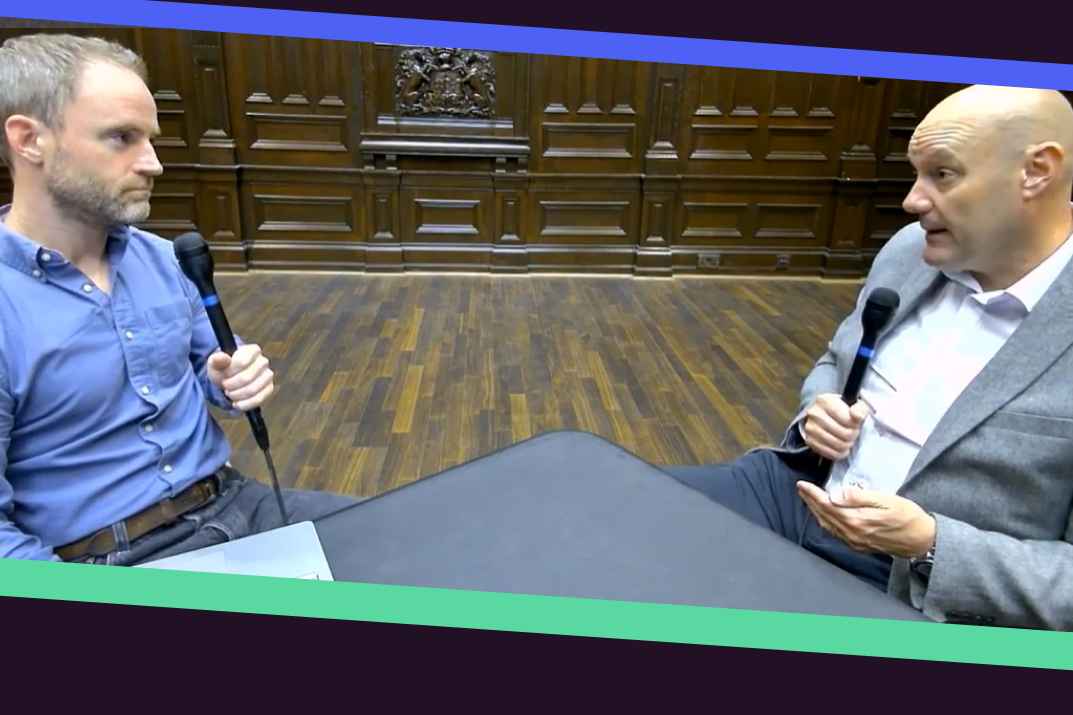
Good morning. Welcome to Joining the Dots. Today we welcome back for a third time Matt Horn. Matt Horn is our Director of Intelligence and Investigations and has had an incredible career tackling some incredible threats which we will be getting on to. Today we are going to be talking about Operation Venetic EncroChat as is known and in particular the Channel 4 documentary, which some may have seen recently. It’s called Operation Darkphone Murder by Text, which again tracks this pretty incredible investigation called Operation Venetic, which was the, I think, the largest ever investigation undertaken by UK law enforcement, which Matt will expand upon more. So today we’re going to be talking about this. We’re going to be developing out some themes, but we will have a bit more on the technology angle as well as all the other interesting angles that this operation has. So first of all, Matt, welcome. Thank you. Matt, if you’d like to kick off, perhaps with a very brief introduction for yourself. I know this is your third time, so many devout listeners will know you well, but just for those who haven’t, either don’t know you or either may not know anything about Venetic, could you also give a bit of a summary of that for the listeners.
Matt Horne
Yes, certainly. So my background before working in technology and working with Clue to support our customers was a 30 year career in law enforcement. So I was originally a police officer and I spent a significant period of time as a civil servant, ended up at the National Crime Agency. And during that career, I’ve sort of worked across serious organised crime, proactive operations, covert operations, intelligence, and investigations and had a really rewarding and interesting career.
Thomas Drohan
And a quick plug for your podcast, which we recorded about a year ago, where you discussed and we discussed in some depth the history of organised crime, particularly in the UK. So for listeners interested in that, please do go and seek that out.
Matt Horne
Absolutely. So you asked about Operation Venetic and EncroChat. So I’m just going to take us back a little bit. So it’s the turn of the decade going into 2020. And listeners may recall that was the time also that the COVID pandemic was unfurling and emerging in the country at the same time. But myself and a lot of other officers within the National Crime Agency have been working for a considerable period of time trying to understand better how do organised criminals communicate? How do they protect their communications? How do they communicate and avoid law enforcement being able to capture what they’re doing? As that was an increasing and emerging problem. It’d been going on for many years. It tracks from the initial instruction of encryption into communications and there have been a whole series of different platforms that organised crime groups in particular had adopted because they thought it could keep them away from law enforcement. But coming up to sort of the end of 2019 and coming into 2020, there was one particular platform known as EncroChat telephone network, which had really got a grip and a hold on the organised crime world and was used extensively by organised criminals to communicate. And it was a real challenge for law enforcement.
Thomas Drohan
And did you know about EncroChat at the time? Were you aware of it being a Yes, yeah, definitely.
Matt Horne
So the team that I was working with, whose job it was to focus on these emerging technology threats around communication, had been tracking it for a considerable period of time. I’ve been looking at different options, what could be done, but really it was becoming an absolutely pressing problem going around the end of 2019 into 2020 because it was so deeply entrenched into organised crime and was really causing problems. And just so listeners can understand why it’s causing problems, so these devices were designed, so it’s like a telephone device. It looks like a regular telephone. If you looked at it and pushed the buttons, it would appear to be a regular telephone. But if you typed in a particular sequence of key presses, it would open up a completely hidden partition, a completely hidden part of the phone, an operating system just purely used for these encrypted chats. And that’s what it gave really was an encrypted chat service. So the way that would work is that the criminal would have a handle. So they wouldn’t be known by their own name. They’d have a randomly generated name. And I think you could pay to get a better version if you wanted to be, Assassin’s Creed, you could get that. Or if you, otherwise you might be Purple Brick, just as an example. So you’re known by this handle, so it’s quite anonymous. And then these devices were being used by organized criminals to send messages to each other, organize all their criminal activities. And because of the encryption, both of the devices themselves and because they’ve been hardened, to make it more difficult for forensics. Basically, law enforcement found it really hard. Just a couple of things that people might find interesting around technology. The way these things were designed was to have things like a kill code. So if you were a criminal and you were caught in the middle of some criminal escapade and they seize this device off of you at that time and they ask you then for the PIN number to open it up, you could give them the kill code and if that was then input by the law enforcement officer, it would wipe the phone. Likewise, they had a remote wipe. So if you were part of an organised crime group and one of your syndicate was arrested, it would be possible remotely to wipe their phone. So literally law enforcement might see that phone as they’ve arrested that person being wiped in front of their eyes. So that was the kind of technology capabilities, the anti-forensics, the remote wipe, the kill switch, the end-to-end encryption that was designed to make these things impregnable.
Thomas Drohan
Yeah, it’s like the it’s like the evolution of you know criminals communicating covertly and you know darkened alleys and pub car parks in the old days and not whereas you know now they’re just in line with how social media has developed, then everyone’s communicating online, but not just that, they’re communicating in an incredibly secure, as was, incredibly secure environment where they felt very, they felt no risk that they were going to be, monitored, if you like.
Matt Horne
Exactly. They felt that was the case. And there’s certainly been this evolution of criminal communications from, as you say, face-to-face meetings to landline telephones and telephone kiosks, because they’re moving into brick phones, as you might call them, and people using burners and pagers. But ultimately, that ended up with what I’m going to use to term crypto phones, these devices that were specifically designed to authenticate law enforcement. And then, just to continue the story, in around 20, start of 2020, it became apparent that actually international law enforcement, so the French and the Dutch were working together and that they had a plan to infiltrate this network, to collect data from the devices and to make that available to organisations that were invited to participate and that were in a position to do so. from my point of view, you can probably imagine we’ve been tracking this real challenge for some time and hitting a brick wall, frankly. And then we’re faced with the fact that actually international partners working with Europol were going to get access to these communications. And that’s exactly what happened. They did that operation. I was responsible for leading the UK operational response. And I didn’t lead the international piece that was led by the partners, the French and the Dutch, and they did a great job. But I had to pull together the UK response to that. And that was then really how we got all that data in homemade sense of it and listeners may be aware but ultimately well over 3,000 very high-end organised crime individuals were arrested, thousands prosecuted and convicted and this is still ongoing now. So as we speak now there are cases coming through the courts, very serious cases where this evidence which came from this covert operation to breach this network are still happening.
Thomas Drohan
And just by way of linking back to the Channel 4 documentary, we’ve had, I’ve spoken to quite a few people who have watched it and they’ve thought it was just, it was a dramatization, but also a factual rendition of what you’ve just explained. But I think what was amazing, certainly for people who know you, was the important role you had in that as the gold commander. I think certainly staff in Clue were like, oh, I didn’t realise that Matt was such an important part of that whole thing. You know, there’s a massive role that you had there.
Matt Horne
It was a big role and lots of responsibility and, you know, in a real sense of, you know, obligation to kind of do it right and to do it well. But actually, you know, the point I would always make is That was a huge team. Many, many thousands of really dedicated public servants, civil servants, police officers, police staff, other government and public sector and private sector, all supporting that huge endeavour. And that’s one of the key things of it, actually one of the privileges to lead such a large task force across, you know, pretty much the entirety of UK policing and wider law enforcement and the way that law enforcement agencies and individual law enforcement officers, recognised the challenge, recognised the opportunity, recognised the risk and basically put their shoulders to the wheel and made such a success of it. was down to this massive team.
Thomas Drohan
Yeah. Do you perhaps want to expand a bit on that sort of period of time that you had where suddenly, I think it was turned, the lights were turned on for a period of time?
Matt Horne
Yeah.
Thomas Drohan
How did that work?
Matt Horne
You’ve gone from a situation where there’s a term that’s often used of going dark around this, and I think in the television programme, one of the other contributors from the Dutch police, Netherlands National Police, talked about, if you control the comms, you control the battlefield as an analogy. And, in terms of things like EncroChat, we didn’t have control of the comms and we were completely dark. And all of a sudden, then when this operation kicks off, suddenly you’re getting the data that you would have wanted to have as a law enforcement officer you’d wanted to have. You suddenly got it. But here’s the thing, it’s coming in massive waves, almost a bit like a tsunami of data as we talked about. And it’s anonymised and there’s no structure to it, you know. So there’s a huge task at hand, which is how do you structure all that data so you can make sense of it in a sensible way and you get that huge team across the whole of law enforcement to work together on a common data set. But then how do you work out who the people are? Because frankly, you can have the best information, but if you can’t attribute that to an individual or a network, again, it’s useless. So that was a really challenging period and it was great to see how ingenious and innovative people were across the National Crime Agency, across all the partners that were involved to kind of make a success of that and to start to turn this raw data into actionable intelligence and to ultimately to manage down risk. Because certainly, listeners may not be aware, but during that first few months, we couldn’t really reveal that we knew this. was a big secret. So it was vital that there wasn’t lots of operational activity happening, but it was also revealing huge amounts of risk. As you can imagine, people were seeking to harm other criminals, innocent members of the public. So actually, it was a real massive challenge to get on top of the data. And to protect people before lives could be lost.
Thomas Drohan
Because on the one hand, you can’t afford to risk too much threat to life, yet on the other hand, you’ll find the criminals and have enough information to hold them to account and to prosecute them and to get them off the streets. But equally, there’s a harm to life factor. The other factor, I suppose, as well as you don’t know whether it’s going to be switched off in one minute’s time or in three months time. So, how do you deal with all of that, all of those different factors?
Matt Horne
I mean, that’s obviously, that’s the classic balancing act of any proactive intelligence-led operation. You know, you’ve ultimately got to maintain your access, avoid tipping off the people that you’re operating against, but you’ve got to manage risk at the same time and work towards building the evidence So ultimately you can take these people down and put them before the courts. And that’s the challenge really of covert practice of intelligence-led law enforcement operations. And it’s one of the most interesting, I think, and nuanced areas of the profession. And it obviously does come down to making finely tuned judgements. It comes down to having all the right experts in the room. It comes down to relying upon the specialists. and obviously having a strategy overall that everyone can kind of work to. And that’s where it comes back to the leadership piece. you do need to set some overarching strategy so that thousands of people that are working on this can find their way through those challenges.
Thomas Drohan
Watching the Channel 4 documentary, it really focused on three or four really high profile, serious, organised criminal groups with serious threats and told that the story through the lens of a small number of cases. But the reality is, of course, that there was so much more to it. Could you perhaps reflect on that?
Matt Horne
Yeah, absolutely. You’ve hit that on the head. The scale was phenomenal. So there were thousands, thousands of people using these devices and therefore literally thousands of investigations. And obviously the TV show does a great job of spotlighting several of those, which is really interesting for viewers. But just to really re-emphasise that sort of activity that you see on that television programme was being replicated across the NCA, all the police forces, other law enforcement organisations all across the length and breadth of the country, day in, day out. And they’re literally worth thousands of cases. And that’s kind of helps you out to understand the scale of the challenge and the need to absolutely start to build a structured way of going through that.
Thomas Drohan
Yeah, I mean, as you said, this whole Operation Venetic is just a large scale. It’s still going on today. What do we know today now? What do we have more clarity on that we perhaps didn’t prior to Venetic? What are some of your thoughts on that?
Matt Horne
Yeah, I mean, certainly some of the things I’m reflecting on is, you know, we’ve always known that organised crime is a global business because generally speaking, it involves moving large amounts of commodities across the globe, across borders, illegal commodities, and carrying out criminal activity in different countries. But I think one of the things it really showed to me when I started to see the messages and understand how these networks and groups operated was that really how integrated, joined up, borderless that ecosystem is. The other thing that really revealed to me was how technology can act as a massive enabler and can open up that vast network. So once you are inside that communications network, once you’re a node in that network, you’ve got access to a global network. Now that is perhaps something that listeners might not be totally familiar with. They may have a view about organised crime as being something a bit more local. There definitely is local aspect to it. Serious harm on the streets, that is really, really challenging stuff and needs to be dealt with very rigorously by by the authorities, but this globally connected, online, digitally enabled aspect of organised crime is one of the biggest revealing factors for me.
Thomas Drohan
And I think one of the beauties of it is because these criminals didn’t were so confident they weren’t being watched, that they gave away the everyday, as opposed to, I might, the plan is to go and shoot them at 9pm or something. It’s not just about the critical information, it’s the background. And you sort of learn, I think, the background, how these criminal operations work a bit more, the everyday, the how different teams, the specialisms, all this sort of stuff. And the other reflection I had was just how many parallels there are to legitimate business, in terms of, effective communication, effective accountability and responsibilities. these are all things that effective global organisations do. And it appears very clearly that effective global organised criminal groups also do.
Matt Horne
The reliance that this system was secure meant that people did give away a lot of information that was really useful. It still required a lot of very meticulous intelligence and detective work, but they gave away a lot of information which could be used as part of that attribution challenge I talked about before, because you might have that very critical information about their criminal activities, but that background information is how you’re going to work out who they are. So that was definitely a feature. And criminals that maybe would operate with what I’m going to describe as quite a high level of trade craft, in their day-to-day activities, so they may have been very cautious about where they met, who they meet with, what conversations they’re having and how they structure their ways of working, were very open and were displaying very poor tradecraft in the way they use these devices. But that’s because they were convinced they were impregnable. But moving on to what you’ve explored further there, absolutely. the way that the intelligence information revealed kind of the different specialists, the kind of different roles and the way that was structured, almost like the supply chain and the integration of that supply chain and the way things operate, certainly kind of parallels what some of the best practices would be in legitimate business, but clearly for a completely illegitimate, illegal and often violent, very dangerous form of criminality instead. And the final bit I’m going to say is like it revealed for me the very casual nature of this. the criminal, their activities, kind of in that the way that it came across in the messages, it was just a very casual day-to-day. This was for these people, this is literally their lifestyle, it’s their job, it’s what they do day in, day out. And they’re ongoing with that activity and a very, very casual about it in a way that might surprise listeners.
Thomas Drohan
I suppose the analogy when I think back to the documentary is on the one minute that criminals might be exchanging messages about what they’re having for breakfast and in that same conversation they might confirm they want a hit on a particular criminal. It’s that sort of…
Matt Horne
Exactly. It’s that interplay between those. Yeah. And, you know, I should say not everybody made it easy and there was some really excellent detective and intelligence development work done to work out who was who. But absolutely, that was a feature of it, as you said.
Thomas Drohan
And what about the nature of sort of hierarchical organised crime groups? Did it sort of reveal anything on that and how that’s evolving?
Matt Horne
Yeah, I think what I saw was that there were certainly people that were using these devices and had become quite senior players within supply chains drugs or firearms, who it certainly looks to me like had accelerated their careers in criminality through the technology. And that, in a more conventional years gone by model where a criminal might have to go through a whole apprenticeship of crime and spending time in prison until they get to the point where they’re trusted enough to be operating at a high level. I think I saw that a significant proportion in this where the technology gave an entry level for people to come in and actually progress and escalate quite significantly. And that’s something again, which I think is an interesting technology conversation theme for us to think about, because I think we see that more broadly. Going beyond this particular operation, as impactful as it was, the ability for technology as an enabler to enable people to escalate, to enable them to have greater reach, the power of technology for criminals is a significant challenge.
Thomas Drohan
Which is, it’s no surprise, but it’s exactly the same in legitimate world. people, solopreneurs, as it’s called, entrepreneurs, but you can grow huge businesses just by amplifying your digital presence from your desk at the end of your bed. And it’s a similar principle in criminality, and it’s just a it might sound like it’s stating the obvious, but reflecting on how real life echoes into criminality is always a good thing to do.
Matt Horne
Yeah, I agree.
Thomas Drohan
So, should we should we talk a bit about the technology angle, where you think about phonetic, but what were the what were the big technology challenges that really resonated with you, and maybe we could talk a bit about how we can tackle some of those things.
Matt Horne
One of the technology challenges is the one that’s associated, I think I’m going to probably use the term with collection. So how do you collect? How do you get access? How can you gain access to data which is being shielded or obfuscated? So that was a key part of the technology challenge, but that wasn’t the part of it that I was really involved with because that was being done by international partners. So we were being presented with a huge amount of data and very welcome, huge amount of data. But that for me was where the biggest technology challenge was in the piece that we were facing because there are a number of things that I think come from that. Data volume is the first one, just the sheer amount of information and then the technology challenge to make sense, structure, organise, orchestrate how you’re going to act on that. You’ve then got the anonymity factor where the technology is being designed to create anonymity and to make it difficult to attribute and prove who’s using a device. So that’s a big challenge. But you’ve also got a challenge that I’m going to use the term sort of fragmentation or fracturing of data because you’ve got, you know, you’ve got these parcels of information, but they’re not always in context. You’ve got to build that wider context thing and come back to work out who it is, work out who they’re working with, structure and cluster things together so they move from being fragmented to being in a sense but an ordered structure. to deal with. So for me, those were the biggest technology challenges. And this is where obviously technology and data are kind of interchangeable, really. But that was the big challenge.
Thomas Drohan
Yeah, I think I’m working on this analogy. It might not quite work, but let’s give it a go. The way that I see this kind of work because I think of it like an iceberg and the tip of the iceberg, this point that’s above the water is that stuff which you can get to. So it’s the stuff that you can get to. But what we all know in all of our roles, but I particularly in this operation is there’s a huge amount that, you know, under the water that you might know about, but you’re just, you don’t quite, you can’t get to it. So I suppose part of this for a technology standpoint is How do you make that tip of the iceberg the most relevant, the highest priority, the work that you need to work on in any one given time? Because we’ve all got great big icebergs.
Matt Horne
Yeah. No, I think that’s exactly right. And I think, you know, the lessons I take from the operation we’re talking about now and my wider career, whether it’s working in cyber crime or child sex abuse and exploitation online, all those different areas of criminality where technology is a feature. is exactly that focus. How do you focus your activity? How can you structure your plans, your collection plan, how you’re going to gather the information? You know, you may have multiple different disparate sources and each individual one on its own is not going to open up your case, not going to necessarily turn the lights on. It’s not going to necessarily result in a disruption or a conviction against a criminal. but you need to start to be able to weave those together, overlay them, find the links, the correlations, identify where the gaps are, focus effort there, and build this picture, this intelligence-based picture. Yeah, single version of the truth is a word that we use quite a lot. And that for me is really the big technology challenge because there will always be different access and collection challenges. And sometimes a particular access or collection will be available to you and sometimes it won’t. What else have you got? What have you already got in your back catalogue of intelligence and information that will be the dot that you connect to this new piece of information? And that for me is where the technology challenge now is.
Thomas Drohan
Yeah, I can see that totally. So Venetic had this sort of just unbelievably large amount of sort of, if you like, information coming in. But actually, when I think through, the Clue customers, I see very similar challenges in terms of, information that might point towards harm or might not, but it’s just we suspect it might, needs to be looked at. And that might be coming from messages in the case of the Venetic, it might be coming from other third party systems that are monitoring, an infrastructure, for example, and identifying alerts. It might come from, as you say, just the internet. It might come from a social media channel. It might come from It might come from whistleblowers. I mean, there’s just the list is endless of all of these potential areas where you might be able to spot harm. If you spot it and understand it quickly enough, you might be able to stop it getting worse. But at the very worst, you’re identifying it so that you can then subsequently, you know, investigate it and find the root cause. That is a definitely a consistent factor across. any organisation dealing with harm.
Matt Horne
Yeah, and I’m seeing that. I’m seeing that in my work at Clue. It reflects what I’ve sort of seen and experienced in my law enforcement career. And my sense is it’s going to be increasingly important because, you know, as the data, you know, challenges that we face if we’re working in this sort of space continue to grow, the complexity of that data, the opportunity for there to be disinformation, misinformation, deliberate malicious influence, false stuff being created, AI, but not just that. So what the modern intelligence officer, investigator, counterfraud officer, safeguarding officer, whoever, and I use the term officer, they could be in whatever role, in whatever organisation, what they’re facing at the moment is a very complex information environment, huge amounts of information to sift through, And that identifying that golden thread or identifying that golden nugget, whatever it might, however language you want to use, that link, that connection which says this needs to be prioritised, this needs to be developed as an opportunity to do something here, to get that intelligence advantage, to get ahead of the harm and do something about it. I just think that cuts across huge, huge sways, different sectors and domains.
Thomas Drohan
Yeah, and I think certainly the other challenge as well is when you do find that needle in the haystack through, whether it be through, an accumulating set of information that’s pointing towards a trend or whether it be through, a single incident that comes in, you think, right, we need to go and do this. There’s still, you still got to take that thread of information and build a case. So what I mean by that is, you know, it’s not just, great, we know it. Let’s move on. It’s right. How do we hold this person accountable? or this organisation or whatever it is that we’re chasing and how do we hold them to account in a really, really compliant way? Because it’s very easy to point to poor evidential integrity and cases potentially falling apart. You could be, what I’m trying to say is you could be that you could have the best process for finding these threats, but if you can’t take it through, to its logical conclusion to hold the perpetrator accountable. What’s the point?
Matt Horne
Yeah, 100%. And I think there’s kind of two sides to that coin. The first side of the coin is the actual intelligence side of it. So working out who is causing the harm and what you can do about it and who they are and building that picture. There’s a lot of risk in there. There’s a lot of risk if you’re not across your data If you can’t structure it, make sense of it, connect the dots, start to form a single view of the truth in terms of the threats you’re facing, there’s big risks you’re going to miss things, right? So at the very front end, risks of missing things and therefore bad outcomes happening because you didn’t identify. I totally agree with you though. For me, the other half of the coin, equally important then is the what next, the orchestration of your investigation, your incident management, your prevention activity, whatever it is, It’s got to be done in a compliant, structured way with integrity built into it, defensible decision making, auditable records of what’s happened, and obviously trusting confidence in the platform that you’re doing it on, because ultimately that you’re going to be scrutinised in whatever forum you end up in, whether it’s a court or other legal process. The integrity of your intelligence and your investigatory process is always going to be what keeps you safe.
Thomas Drohan
Yeah, I suppose the other area, so back to the sort of genetic analogy, but sort of extending it again is with this information coming in, if you like, I wonder what automations, what AI could do on the side of the agencies as opposed to on the side of the criminality. for example, watch lists, trying to spot for trends, sentiment analysis, all these sort of things. Are those things that you’ve got your eye on?
Matt Horne
Yeah, 100%. And I think it’s got the promise to be a huge enabler and a massive positive benefit for people involved in intelligence investigations, risk prevention, you know, countering harm in whatever way, in whatever role. Those capabilities that you describe are fundamental and they are being that they’re available to us now and therefore I think it’s incumbent upon us to make those kind of tools available to those that are out there preventing harm and protecting the public and stopping bad things happening. They need those tools and I definitely see that and some of the key bits for me in there will be we all see in our day-to-day lives the power of some of these commodity tools that we can now use that bring large language models to bear, use them in our daily lives. But actually, in the space that we operate in, there’s no room for generative hallucinations, if you like. There’s no room for, you know, we’ve got to get it right. That kind of, that use of AI and those technologies needs to be absolutely grounded in operational reality. It needs to be provenance. We need to be able to demonstrate the accuracy of what’s being done there. But the advantages So kind of like productivity and efficiency are huge.
Thomas Drohan
I think going back to my iceberg analysis, really what I think what technology can provide to those that are tackling harm is an ability to push more of what is under the water over the water, i.e. over the water being that work that you can actually do. So you may, partly it’s making you more productive, users more productive because it’s doing some of the more manual activity. It’s helping prioritize so that you’re doing more with your day.
Matt Horne
Yeah, 100%. I mean, we talked earlier about how technology is and has been and continues to be an enabler, facilitator for adversaries. And I use the term there to include criminals, but it could be other threat actors, it could be cyber actors, could be hostile states, could be a mirror to be terrorists, could be it could be a myriad of different threats that are faced. Technology it does can be can enable them and make and can improve their capability, but the ability for us to use technology in the hands of the protectors and the defenders and the people that are on the side of the rest of us that are doing those bad things. That is massive. The ability to surface those connections in data, to help with the productivity, to take on some of the more manual tasks under supervision and to free up the investigative intelligence mindset to really work on the high end problems and challenges. I think that’s the future.
Thomas Drohan
Yeah. Let’s now go and think through a bit of crystal ball gazing. Let’s put ourselves into 2030 in the context of everything we’ve spoken about. You know, what are the threats that you’ve got on your mind and how do we tackle them?
Matt Horne
Yeah, certainly. As I start to think ahead, the continuing trend around this global connected nature of crime, you know, the idea that activities can be done from across the globe, enabled by technology, and then can impact you in your living room. Whether that’s fraud, whether that’s cyber crime, whether that’s the exploitation and breaching of networks and an organisation’s computer systems, whether it’s individuals or businesses being suffering huge financial losses, that kind of trend of that, the ability for people to operate at scale and at distance through the use of technology is one that I. I bring it as my first.
Thomas Drohan
I can see it as well. I can see it in the example that springs to mind is the Russian money laundering organised criminal group that facilitates that criminal cyber enabled fraud almost in one department on one floor of their office block in Moscow and on the other one are doing state espionage and on the other is, sending digital coins to Colombia to facilitate drug importation all within the same integrated organisation.
Matt Horne
Exactly. We’re already seeing now, you know, actions of hostile states working with, say, organised crime groups to subcontract them to do something like criminal damage like an arson attack or or some sort of surveillance or even potentially like some sort of assassination type activity. So that’s something that perhaps might not have been seen in decades gone by. We’re seeing it now. My sense is through technology and the way that can be used to recruit people and to identify people that might work for you for money, I just sense that this convergence thing between threat types will be a continuing evolution and something that we see even more of in the future. And it does tie back to your example with that, money-aundering group.
Thomas Drohan
Yeah, so I, you know, how do we tackle it? I suppose there’s a technology angle, but also a collaboration angle, because it’s not there’s not going to be one single organisation that can practice, is it?
Matt Horne
100% collaboration between organisations, so different parts of law enforcement with wider public sector, but also with the private sector, so sharing information and data, having those trusted partnerships. But then the international cooperation and collaboration is the massive game changer. I’ve seen that during my career. The operation we talked about today was only possible due to the excellent work done by international partners and their generosity to bring in other countries to that in which we were part. So that international collaboration, cooperation, sharing of information and intelligence working on multilateral basis in things like Europol, Windsopol, but also different countries working bilaterally, obviously things like the Five Eyes Alliance, which is a very strong and capable entity. All of those cooperative and collaborative strategies must be part of the future way of responding to this. I can see no other way.
Thomas Drohan
No, and I think just to extend that, and I know you’ve mentioned it, but it’s the private sector, just everyone. I mean, even us, even the everyday citizen, who is engaging in online activity needs to recognise that risk. The private sector organisations of any sort are being targeted even now, whether it be lower level cyber enabled fraud or it be higher level nation state espionage, all these things are happening to private sector organisations and people. So, how do we how do we bring all those people together and sort of tackle it as a whole system?
Matt Horne
Absolutely. I mean, that I think that is the that is the big challenge, and I think I don’t know if all listeners will be fully across, perhaps how big a threat that is. So, there is for me, we talked we talked recently about in our national security threat assessment that we published about about this conversion of threats and about this actually kind of whole society type of response that is needed. I probably that’s one that listeners might want to take a look at because exactly that. The days of these sort of global threats being dealt with by a single department in a single organisation somewhere are gone. And this requires us to work together between organisations, between the public and the institutions with the private sector and across international boundaries. And that’s the only way with the technology enablement of what’s going on, that’s the only way we can be effective.
Thomas Drohan
Yeah, And the other area is obviously education. The vast majority of cyber enabled fraud and nation state sort of cyber attacks, it’s all facilitated through known vulnerabilities. In the main, these are, if it’s on a personal level, It’s, pressing on links that we probably could have spotted. If it’s an organisation, it’s security patching in a timely fashion. You know, it’s all those things that actually are the basics that we as a society aren’t recognising as important yet.
Matt Horne
Exactly. Get those basics right and make it more difficult. And that’s what we should all be doing, 100%. Yeah.
Thomas Drohan
Great. Okay. Any other reflections before we wrap up?
Matt Horne
We’ve used EncroChat as the trigger from the recent television programme. I’m just going to probably just re-emphasise a couple of points there. Hugely successful operation, but it’s just one in the context of so much other brilliant work being done by law enforcement here and globally. Also, it was only ever successful because of international partnerships and cooperation. And finally, it was a massive team effort. And that kind of team effort when people come together under a common banner, shared mission, shared purpose, one of the most rewarding things to be part of, but also one of the most effective.
Thomas Drohan
Yeah, and I think, as we’ve explained, teaches us a lot of lessons for where things are going and the nature of these threats we need to be aware of. Well, Matt, that leaves me to say thank you very much for joining us today.
Matt Horne
Thank you very much.
Thomas Drohan
Thank you. Thank you for joining us on this episode of Joining the Dots with me, Thomas Drone. We hope you found today’s conversation practical and insightful. If you enjoyed the show, please subscribe and leave us a review on your favorite podcast platform. It really helps us reach more listeners like you. Stay tuned for more episodes where we continue to uncover the stories of those on the front line of justice, harm reduction and global security. This is Thomas Drohan signing off. Thanks for listening.